ANIMAL TRAP
The mouse seals itself inside a fluid-tight tin can.
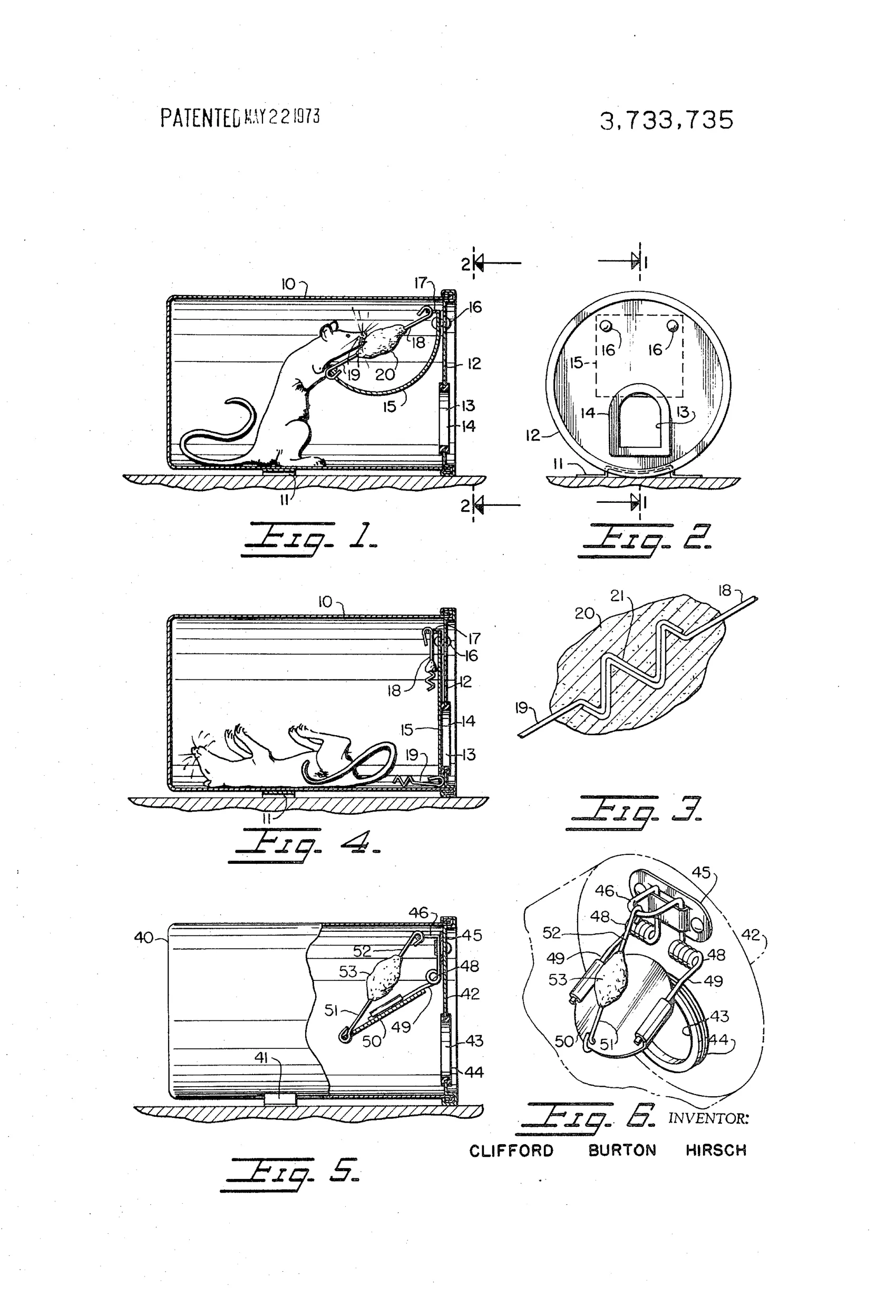
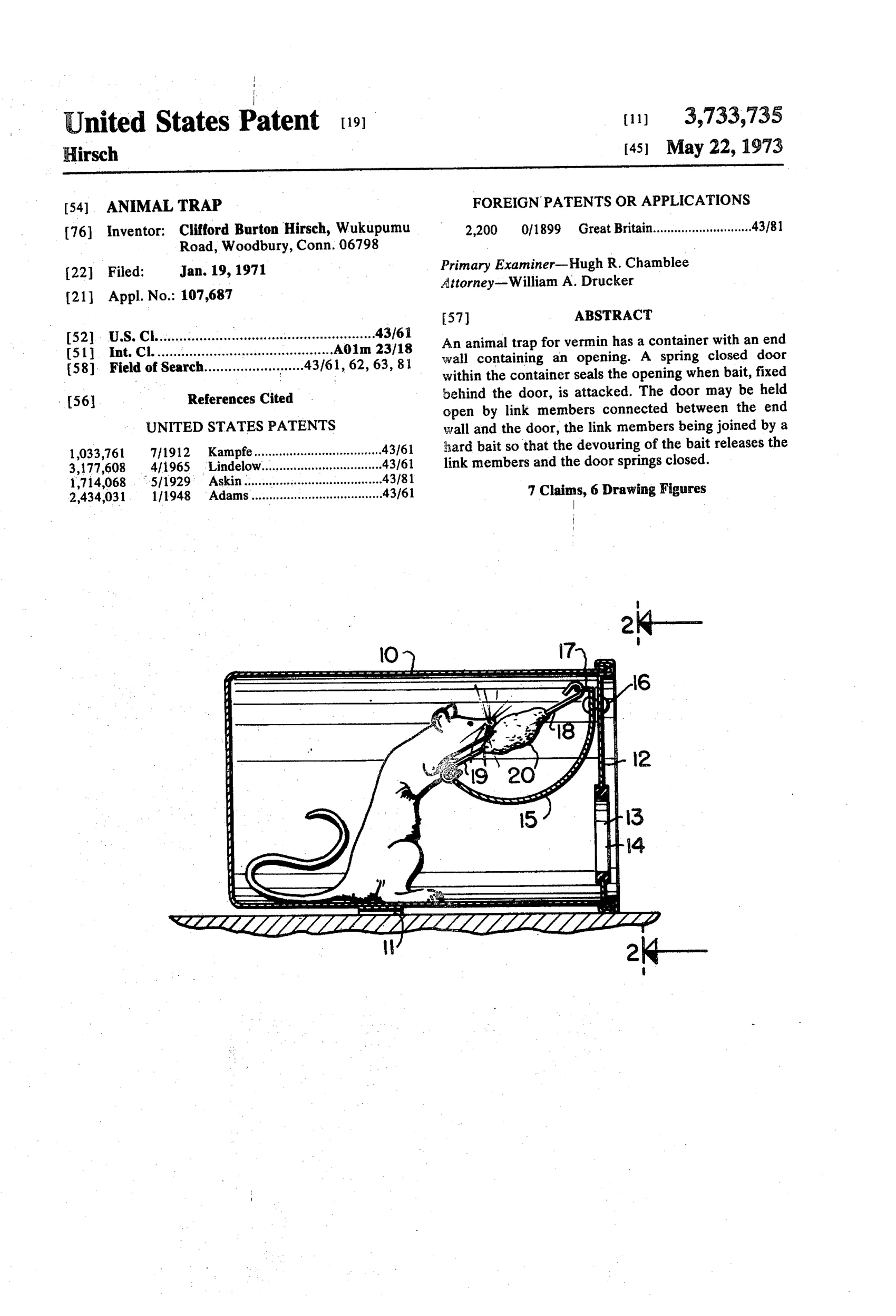
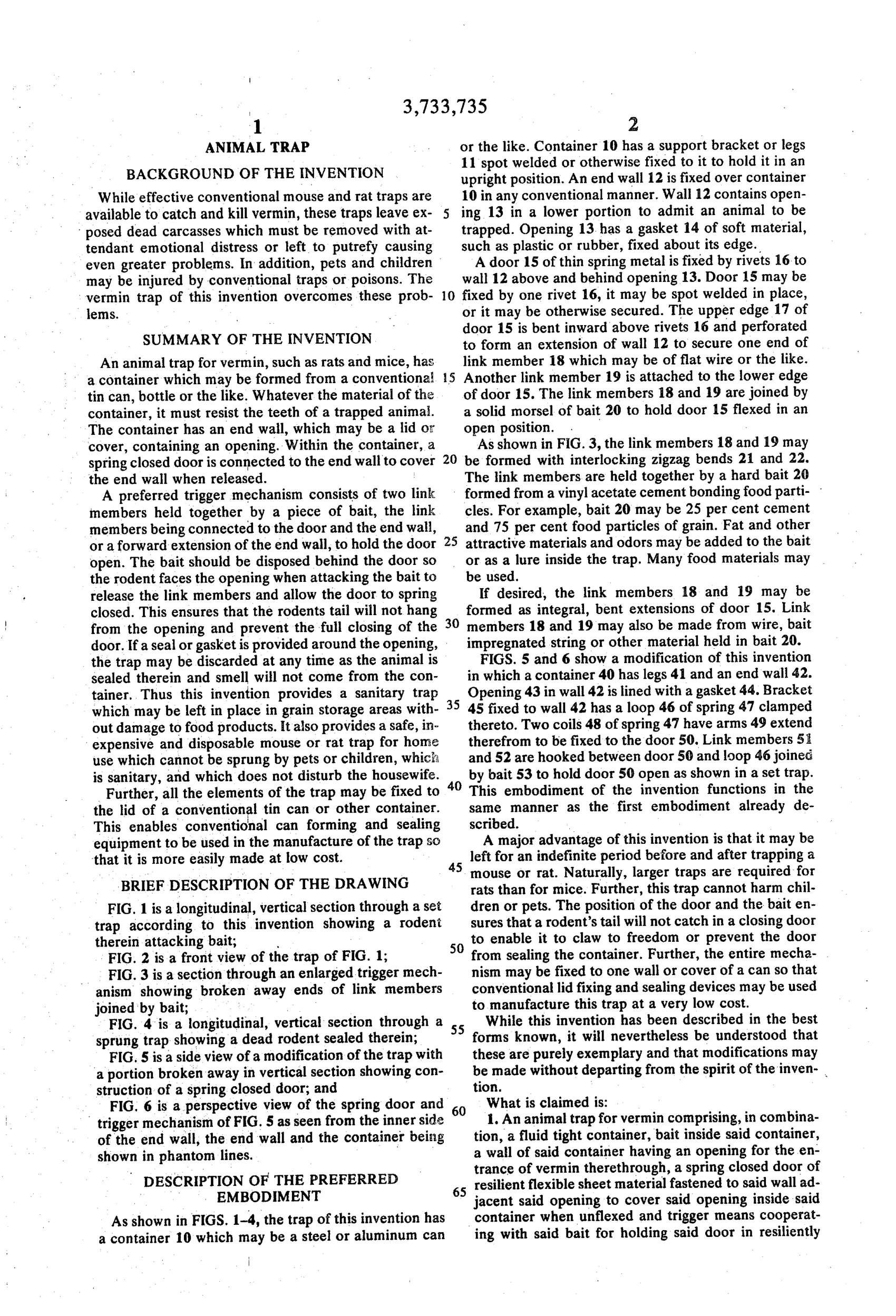
The mouse enters a can through a gasketed opening in the end wall. Inside, a spring-loaded metal door is held open by two link members joined by a morsel of hard bait, which may be 25 percent vinyl acetate cement and 75 percent food particles. The mouse devours the bait, the link members separate, and the door snaps shut against the gasket. The can, now sealed with the mouse inside, may be discarded at any time.
“While effective conventional mouse and rat traps are available to catch and kill vermin, these traps leave exposed dead carcasses which must be removed with attendant emotional distress or left to putrefy causing even greater problems.”— Clifford Burton Hirsch, from the specification
And the world did not beat a path to his door.