TRAP.
The gopher, seeing light through a hole, springs the trap itself.
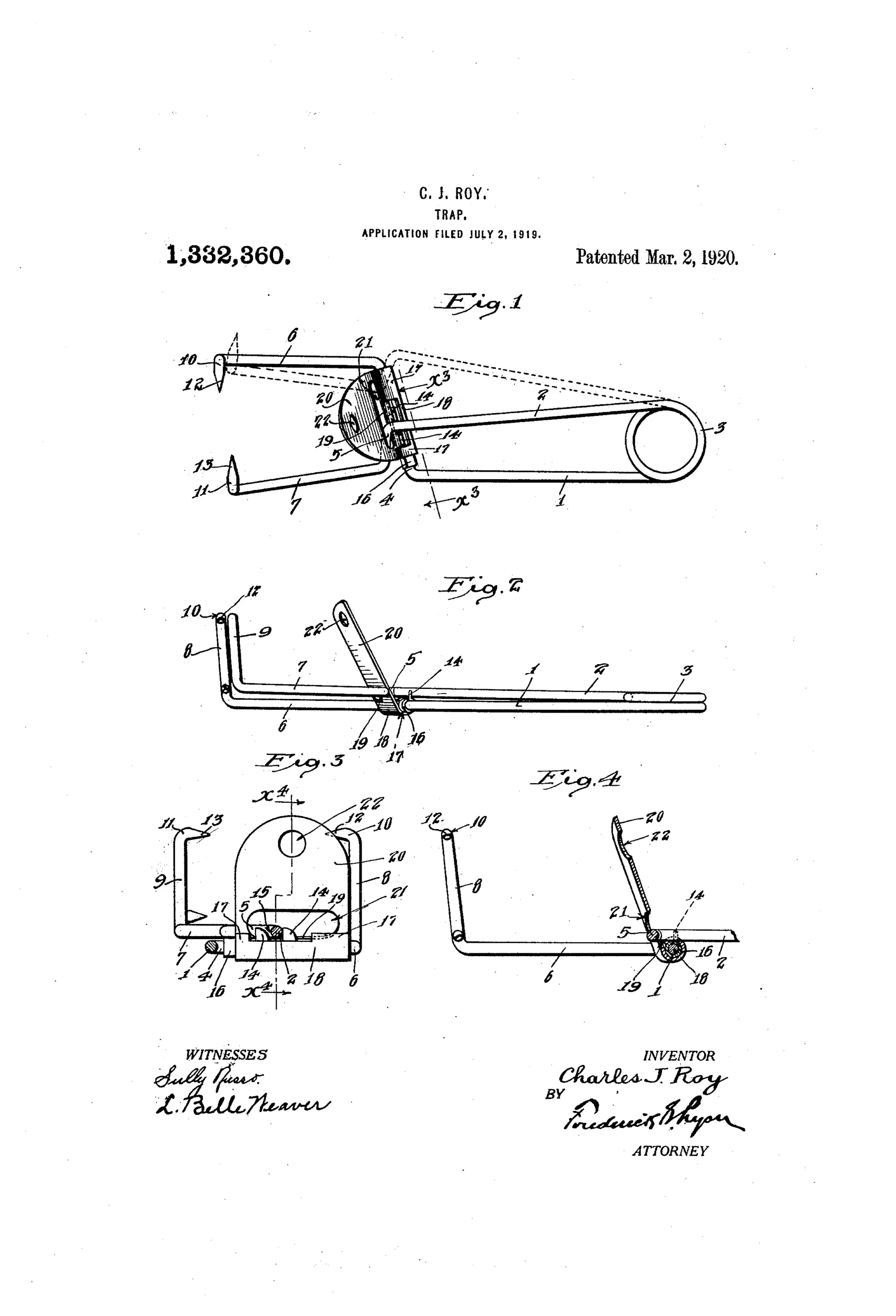
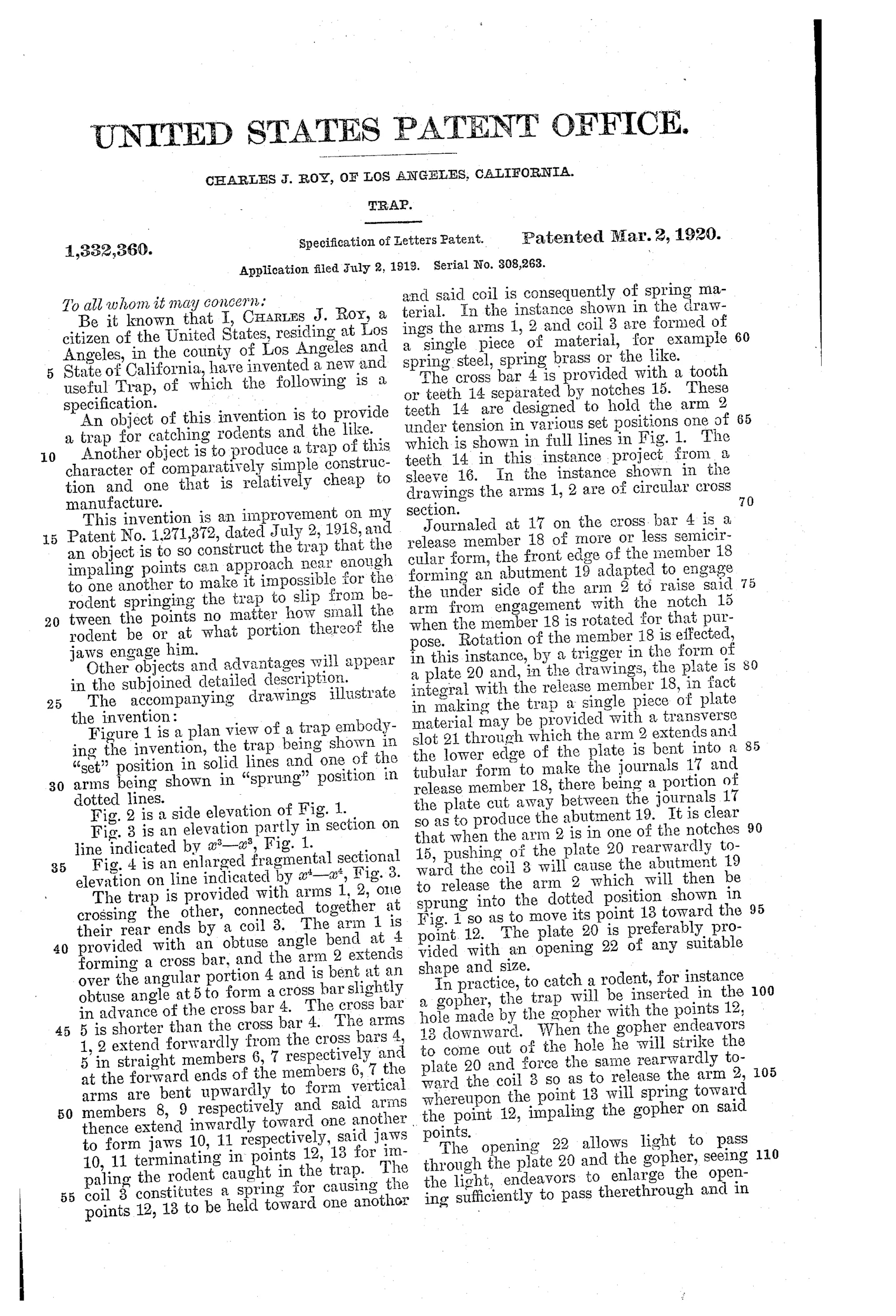
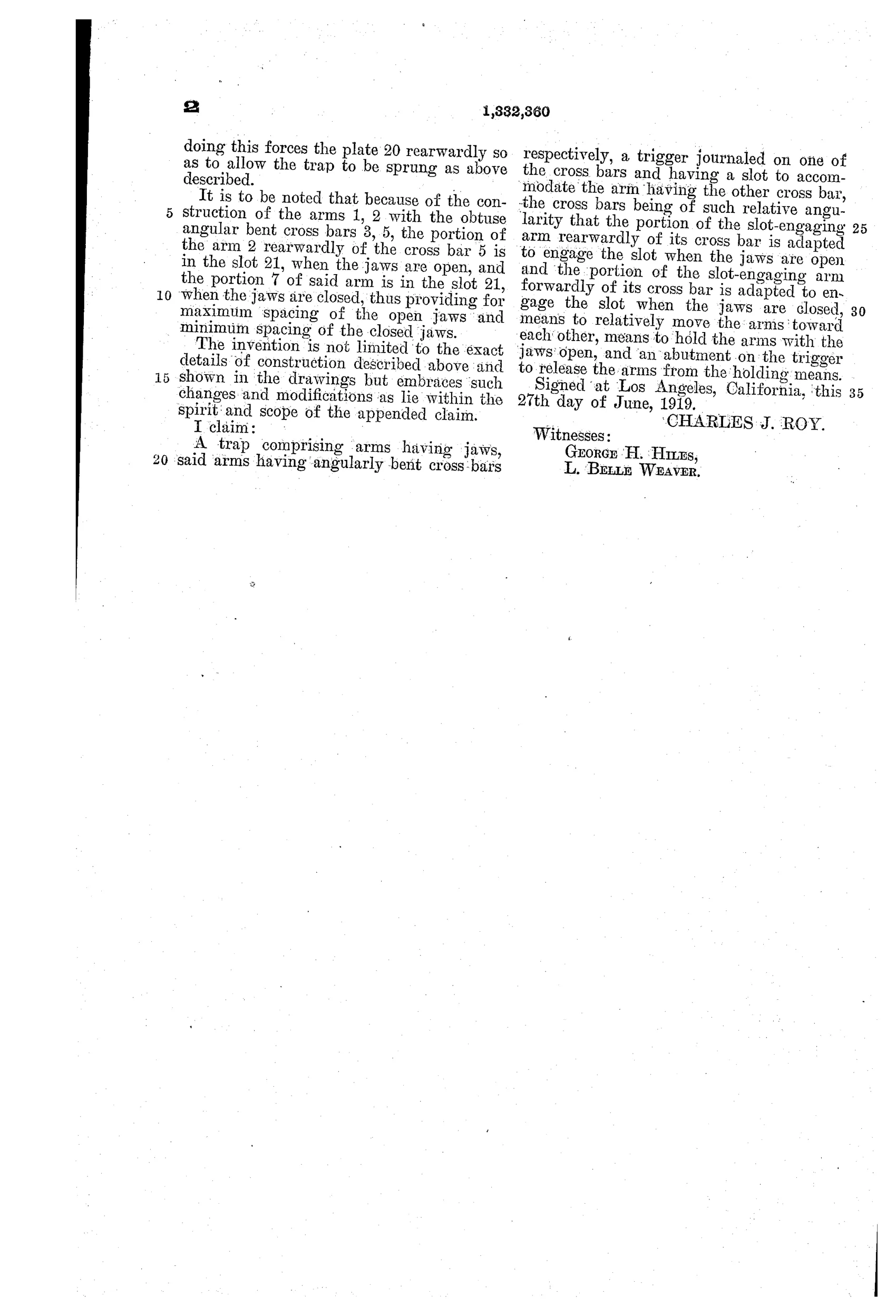
The trap is inserted point-downward into the gopher's hole. The gopher, coming out, strikes a trigger plate that has an opening through which light passes. The gopher attempts to enlarge the opening and in doing so pushes the plate rearward, releasing a spring-tensioned arm. The two impaling points snap together on the gopher.
“The opening 22 allows light to pass through the plate 20 and the gopher, seeing the light, endeavors to enlarge the opening sufficiently to pass therethrough and in doing this forces the plate 20 rearwardly so as to allow the trap to be sprung as above described.”— Charles J. Roy, from the specification
And the world did not beat a path to his door.