ANIMAL-TRAP
A wire fence the mouse is expected to reason about.
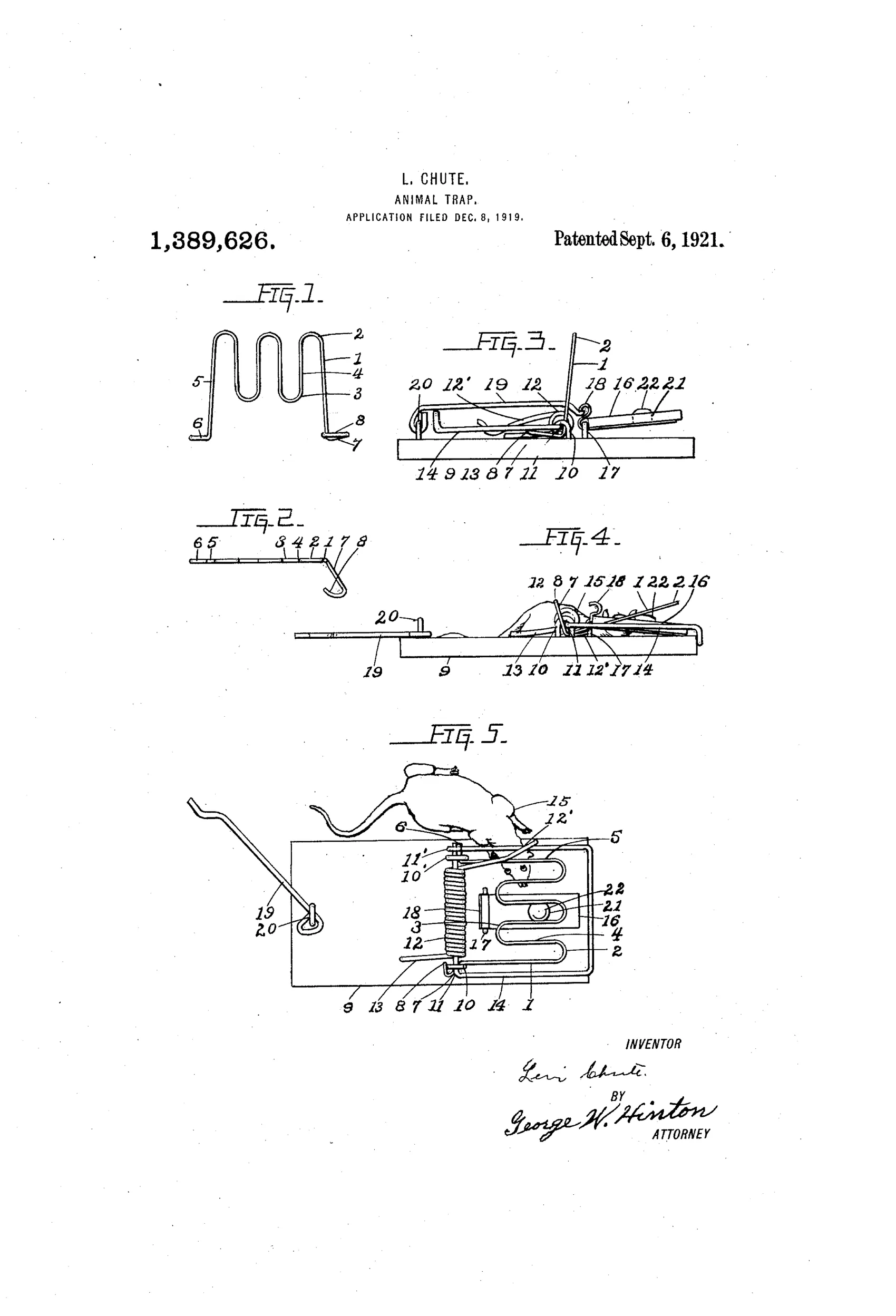
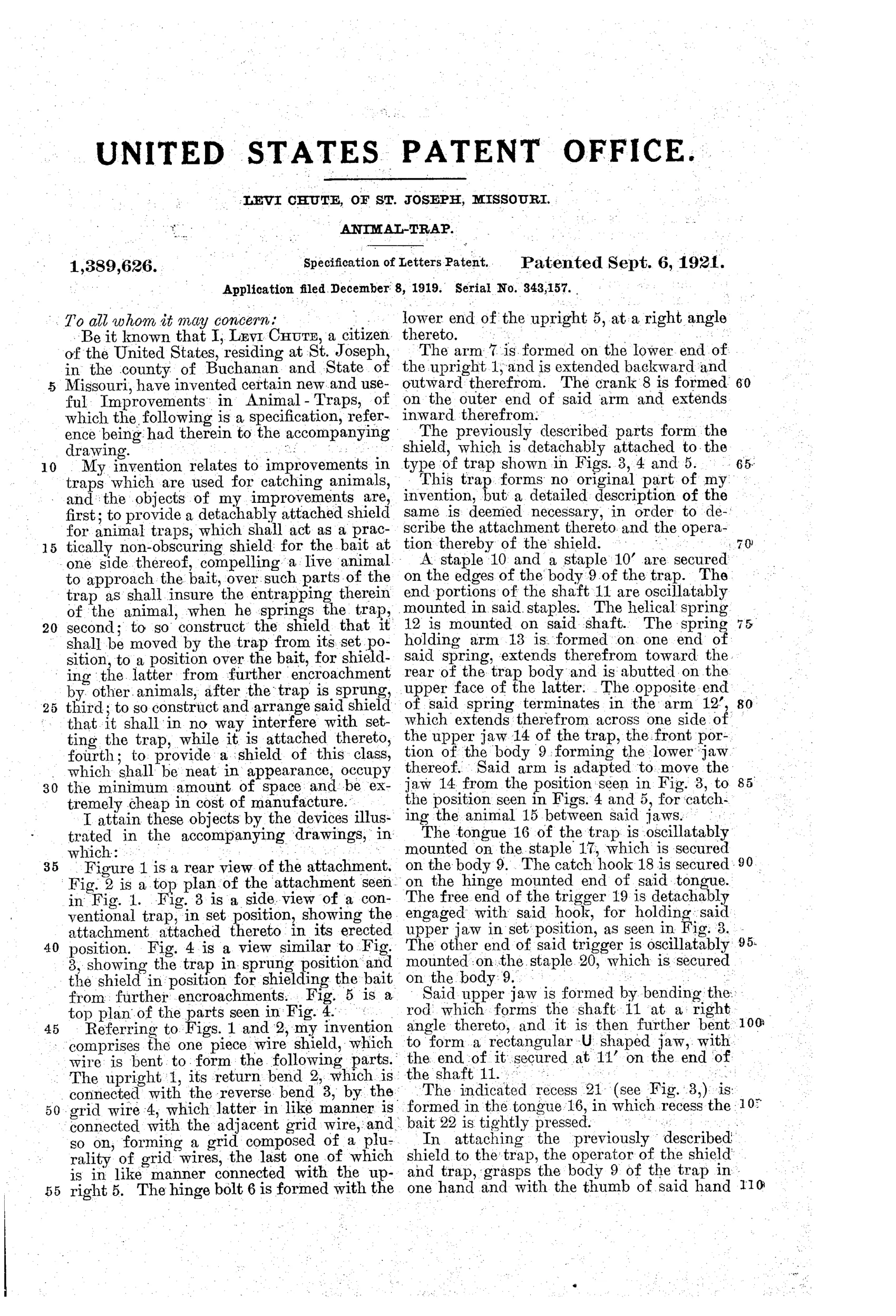
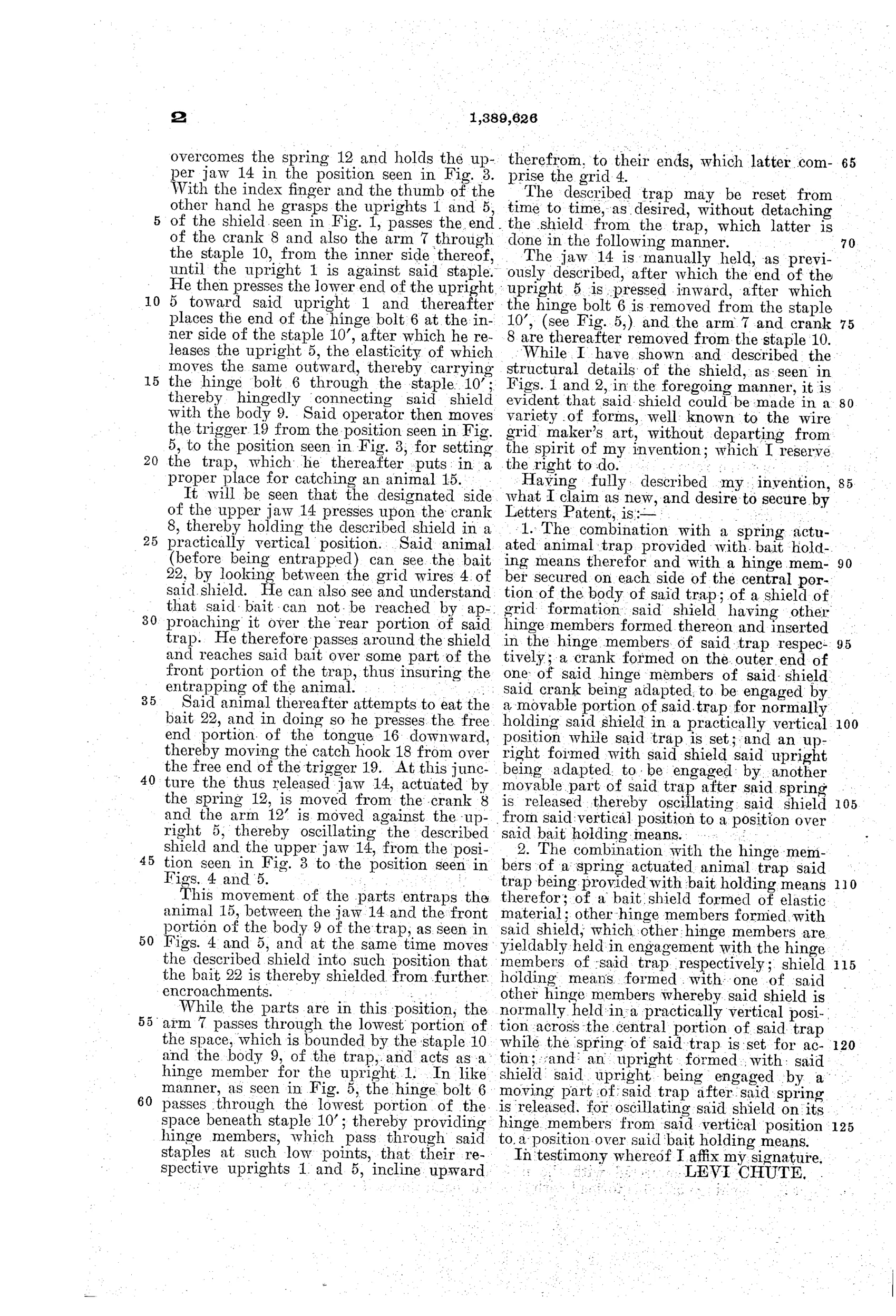
A bent-wire grid shield hinges onto the sides of a standard snap trap. While the trap is set, a crank engaged by the upper jaw holds the shield upright behind the bait, blocking approach from the rear. The mouse sees the bait through the grid wires, concludes it cannot be reached from behind, and walks around to the front of the trap, where the jaw catches it. When the trap springs, the jaw's motion swings the shield down over the bait to keep other animals from eating it.
“Said animal (before being entrapped) can see the bait 22, by looking between the grid wires 4 of said shield. He can also see and understand that said bait can not be reached by approaching it over the rear portion of said trap. He therefore passes around the shield and reaches said bait over some part of the front portion of the trap, thus insuring the entrapping of the animal.”— Levi Chute, from the specification
And the world did not beat a path to his door.