ELECTRIC RAT-EXTERMINATOR
Wets the rat's feet to improve conductivity before drowning it.
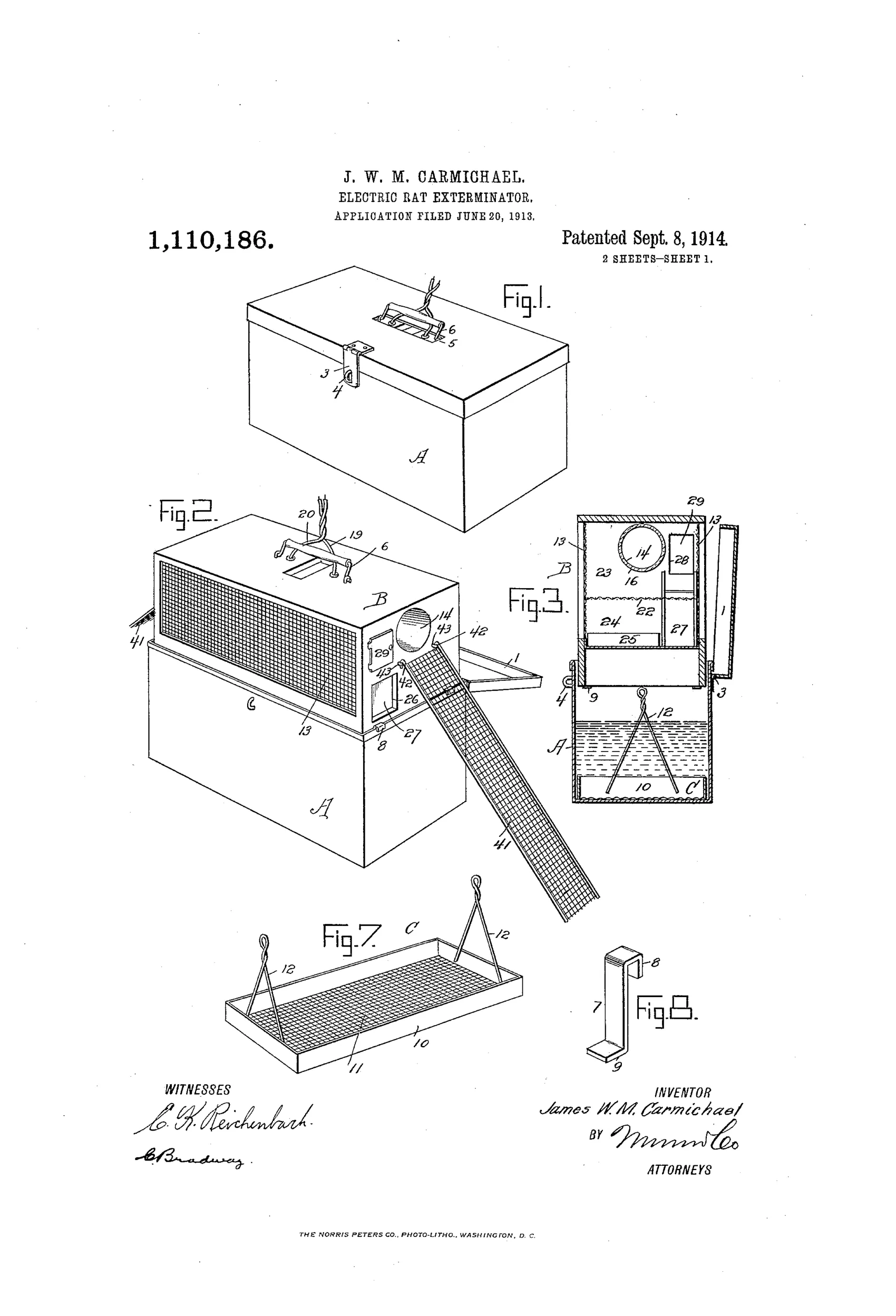
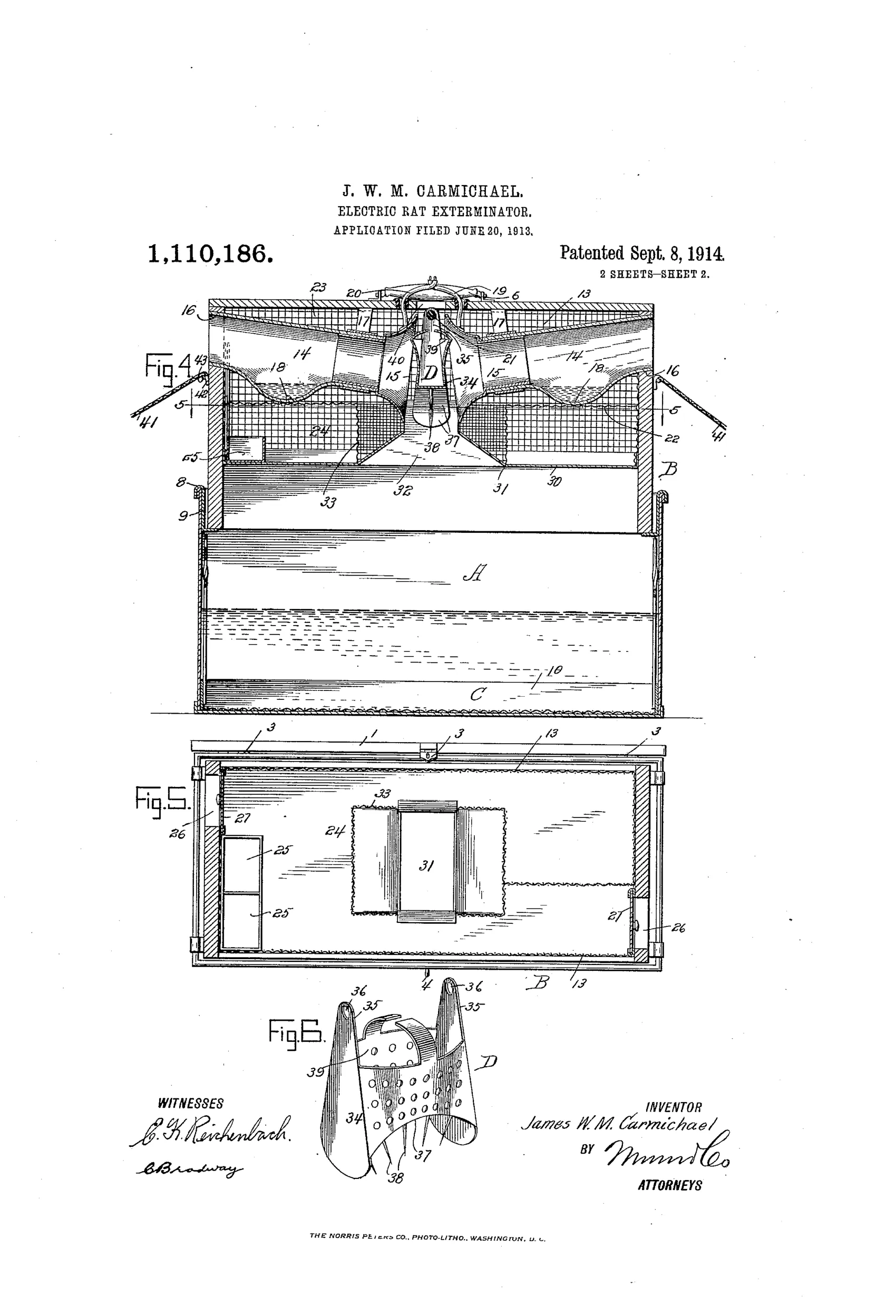
The rat climbs a wire runway into a glass entrance tube, stepping into a depression filled with water that wets its feet. It pushes a suspended metal bait basket against a fixed contact, closing an electric circuit through its body. The stunned rat drops through a funnel into a tank of water below and drowns. Live captive rats held in a lower compartment serve as decoys, and a mesh tray with handles allows the drowned rats to be lifted out.
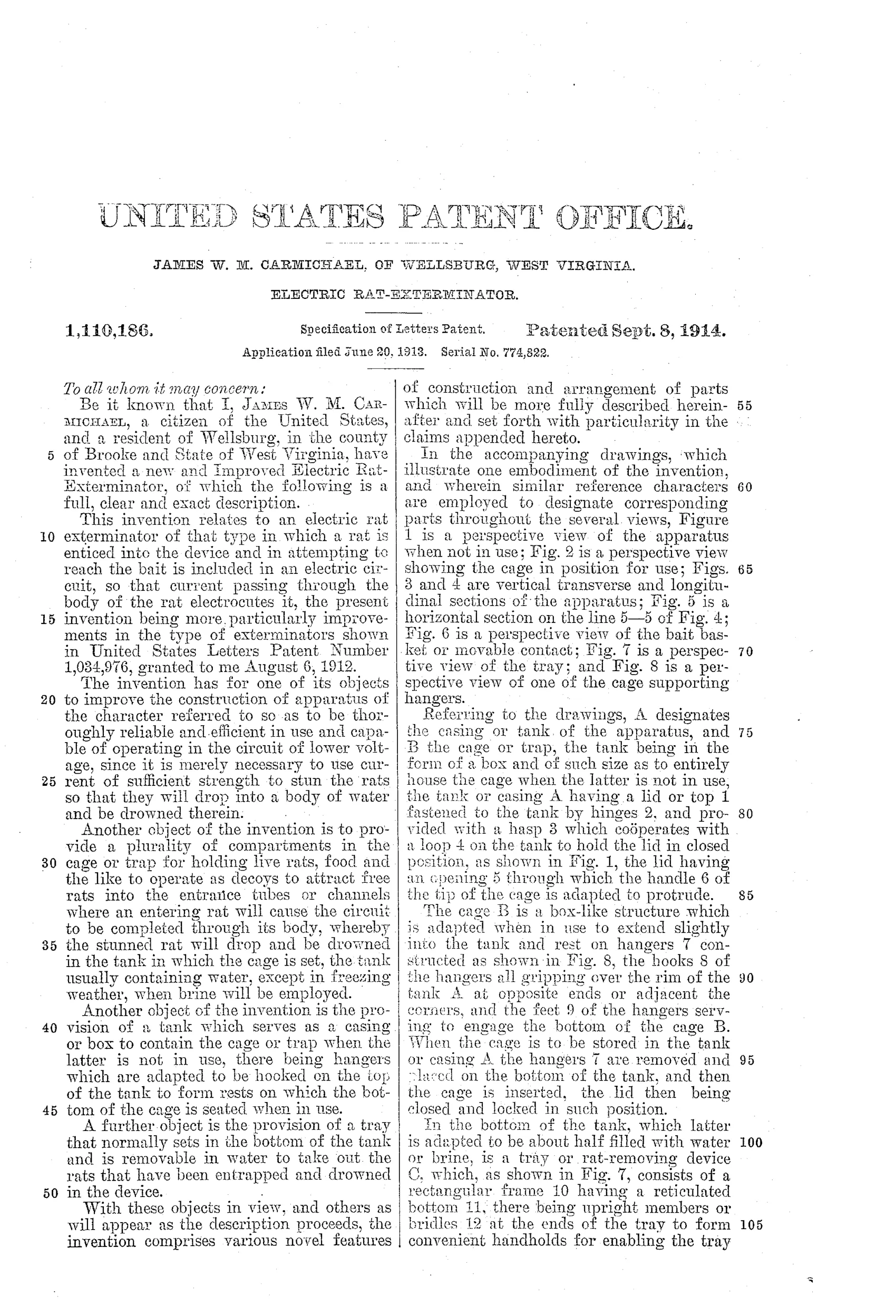
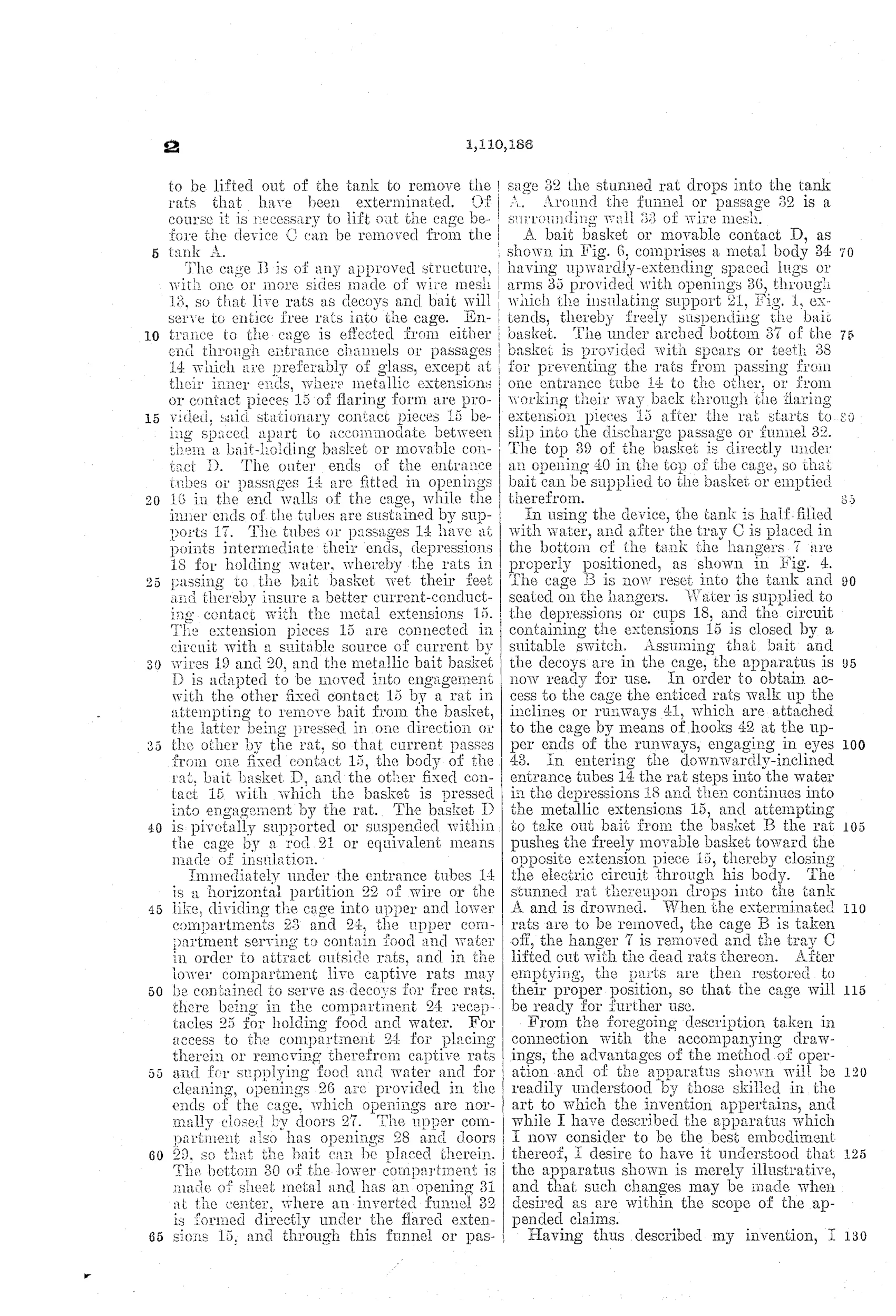
“The tubes or passages 14 have at points intermediate their ends, depressions 18 for holding water, whereby the rats in passing to the bait basket wet their feet and thereby insure a better current-conducting contact with the metal extensions 15.”— James W. M. Carmichael, from the specification
And the world did not beat a path to his door.