ANIMAL-TRAP.
Jaws that sever twigs and leaves but not the animal's leg.
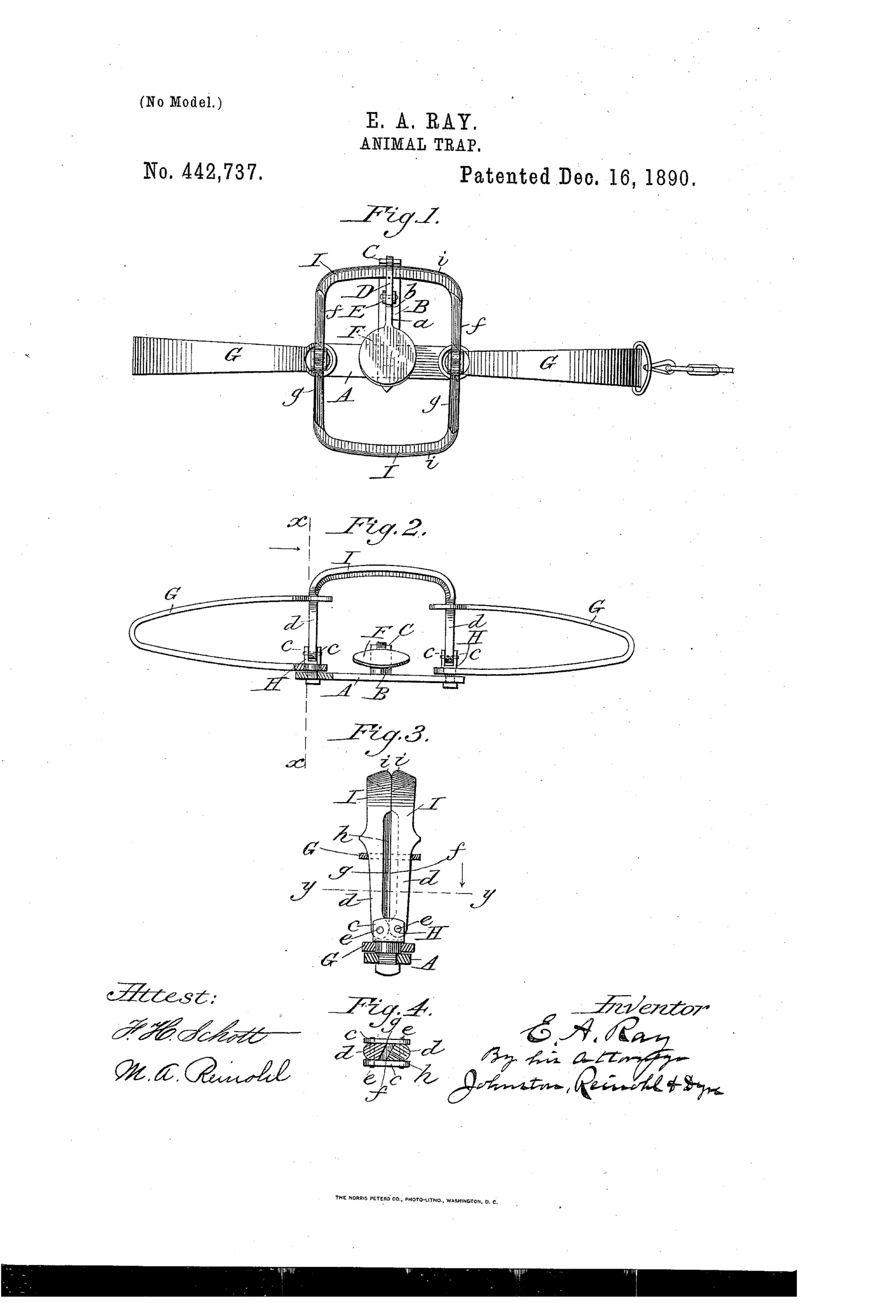
The trap is set beneath water or concealed under leaves, twigs, or a coat of mud. When sprung, beveled cutting edges on the jaw shanks sever any twigs or stems caught between the jaws, and a recess provides space for ice or dried mud that would otherwise hold the jaws apart. The bowed jaws close on the animal's leg with broad, rounded impinging surfaces so the leg is held but not cut off. The rounded ends of the shanks bear upon each other as fulcra, relieving the pins of strain when the trapper forces the jaws open.
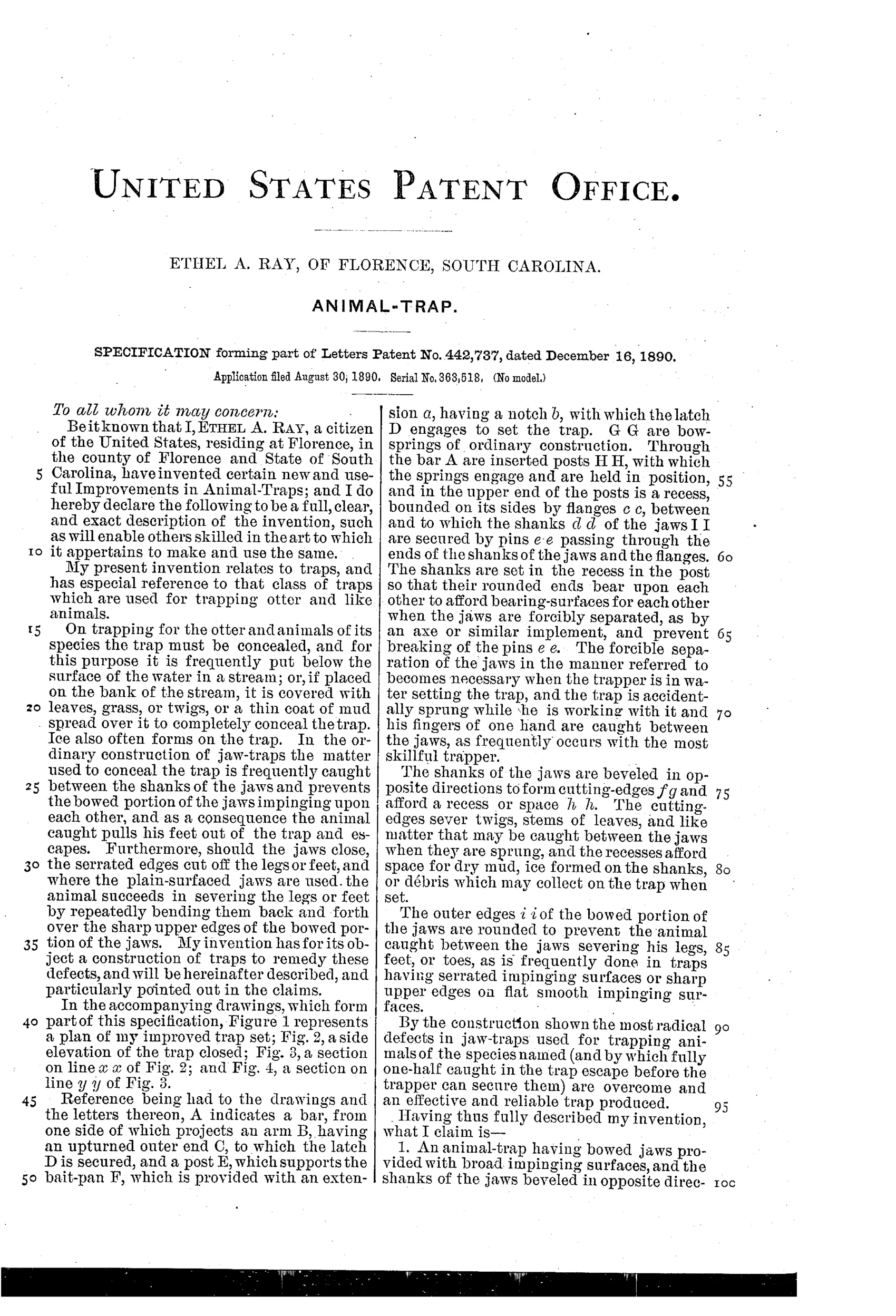
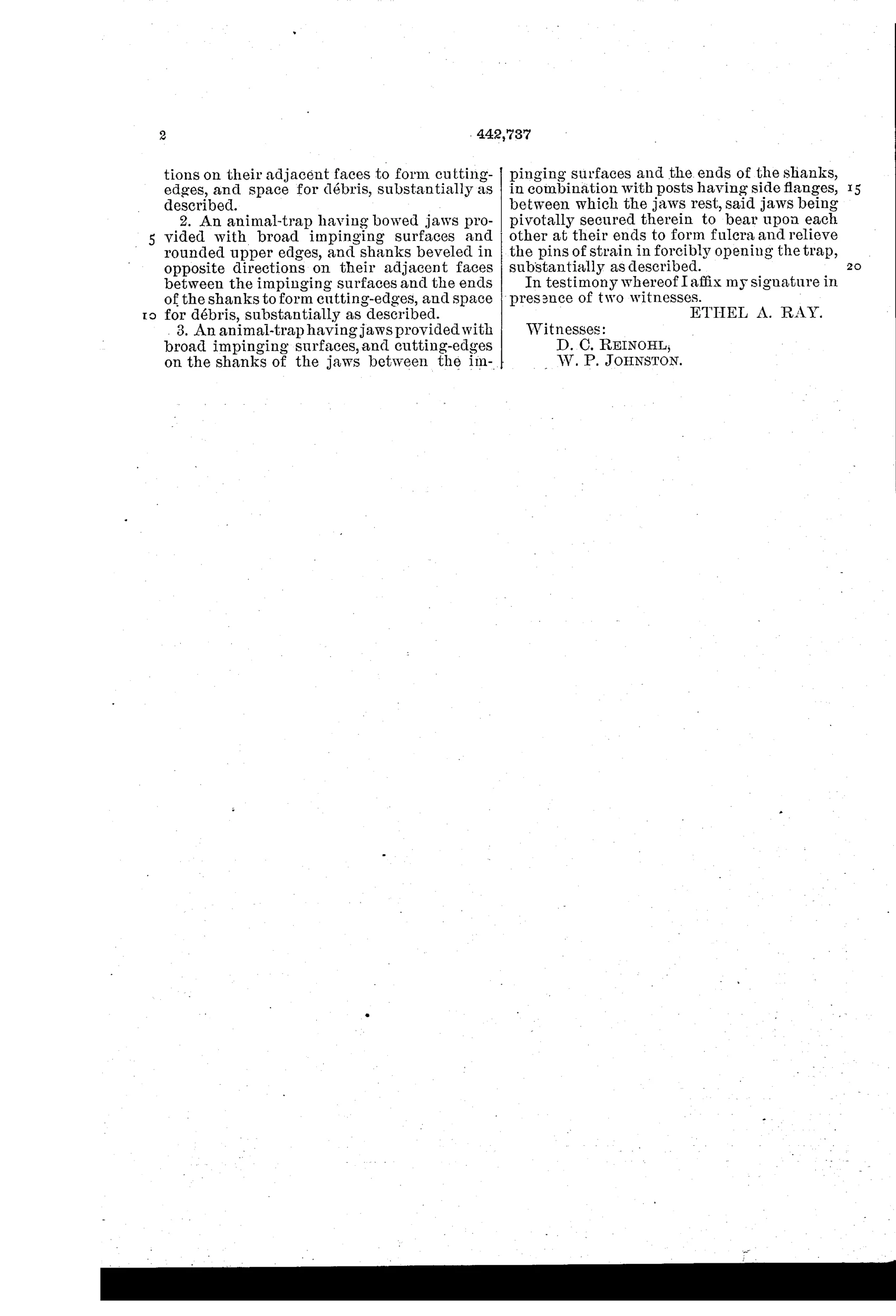
“By the construction shown the most radical defects in jaw-traps used for trapping animals of the species named (and by which fully one-half caught in the trap escape before the trapper can secure them) are overcome and an effective and reliable trap produced.”— Ethel A. Ray, from the specification
And the world did not beat a path to her door.