ANIMAL TRAP
Detects the mouse by light beam, electrocutes it, disposes of the body, resets.
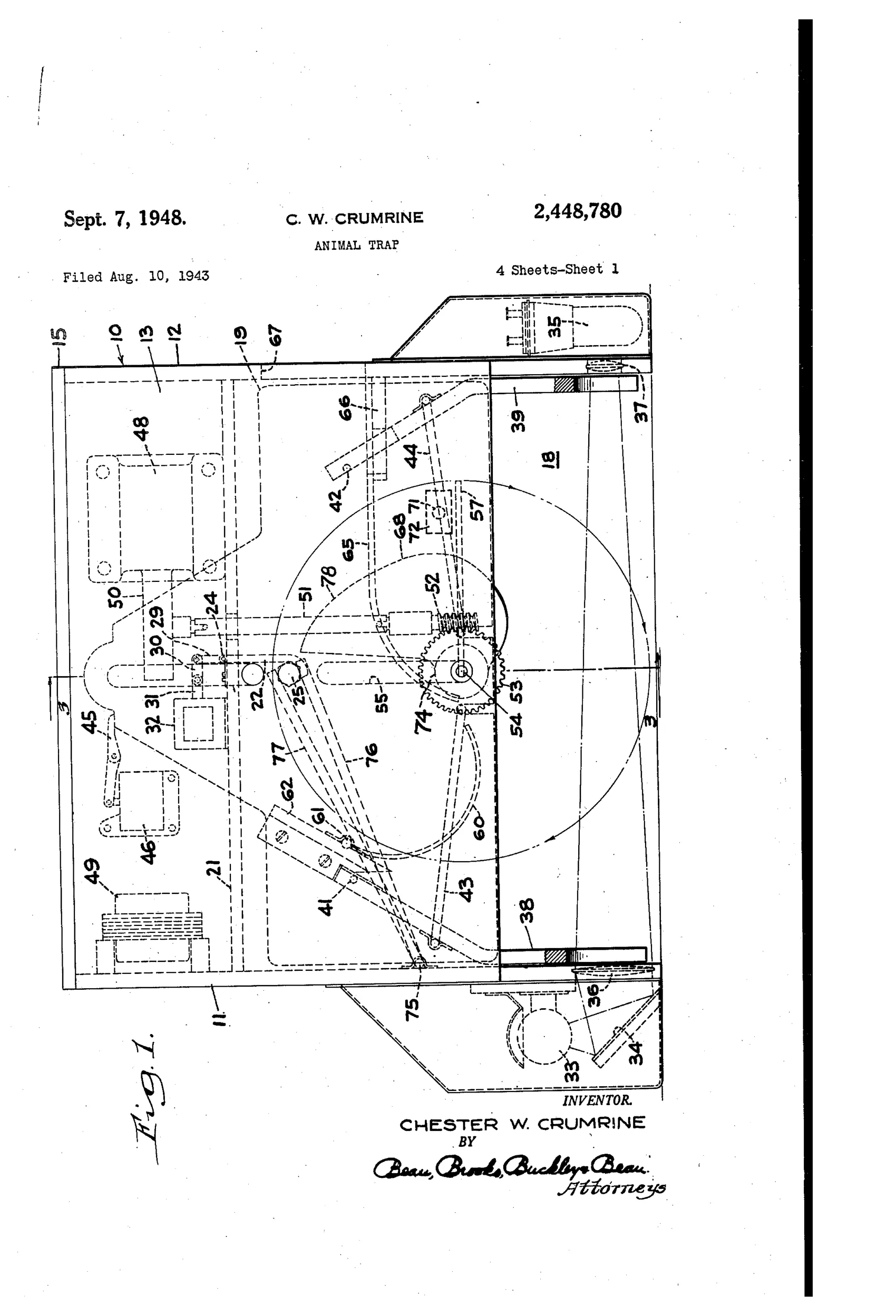
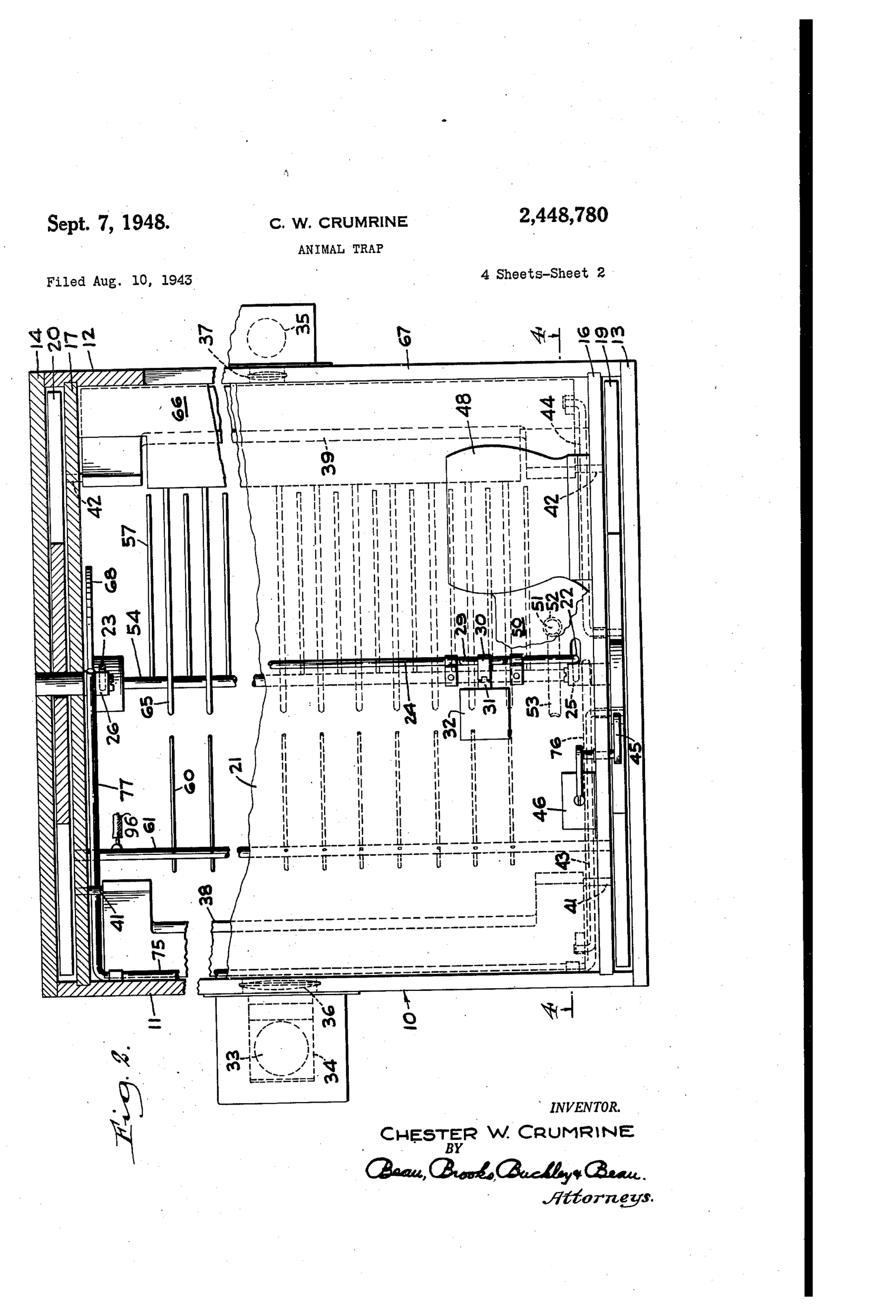
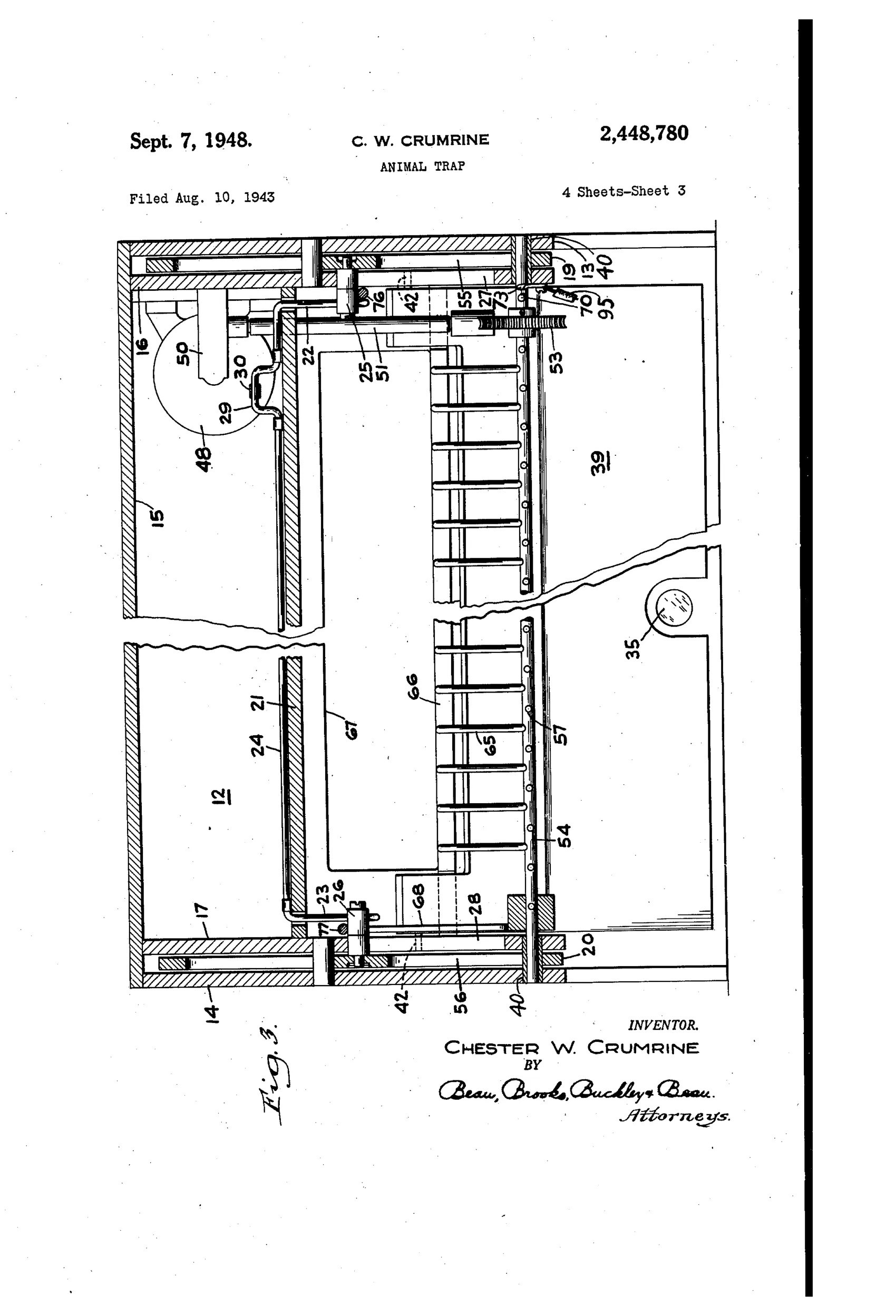
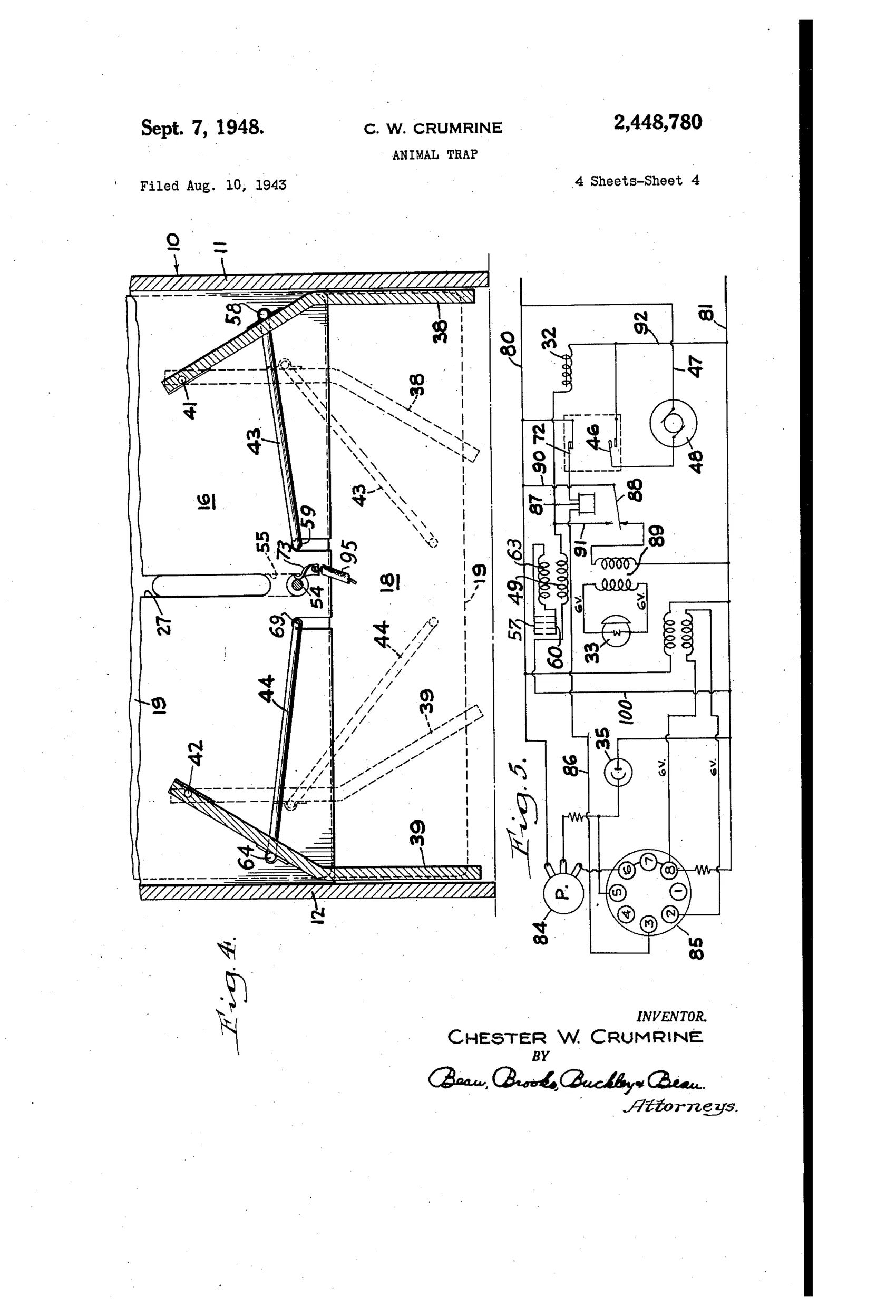
A mouse enters an unobstructed passage and interrupts a light beam falling on a photoelectric cell. An electromagnet releases latches, dropping doors at both ends of the passage while pivoted sweeps swing inward to constrict the space around the animal. A motor-driven rotating grill sweep carries the mouse upward against a curved electrified grid, where a transformer-powered circuit electrocutes it. A stationary stripping grid removes the body from the sweep and pushes it into a disposal zone, after which a cam and microswitch re-latch the doors and reset the entire mechanism for the next animal.
“According to the principles of the present invention, light sensitive electrical means initiate a trapping cycle which traps an animal passing through a predetermined trapping zone, electrocutes the animal and automatically disposes of the animal body and restores all of the parts to their initial preset position.”— Chester W. Crumrine, from the specification
And the world did not beat a path to his door.