AUTOMATIC ANIMAL TRAP
The frightened animal resets the trap for the next occupant.
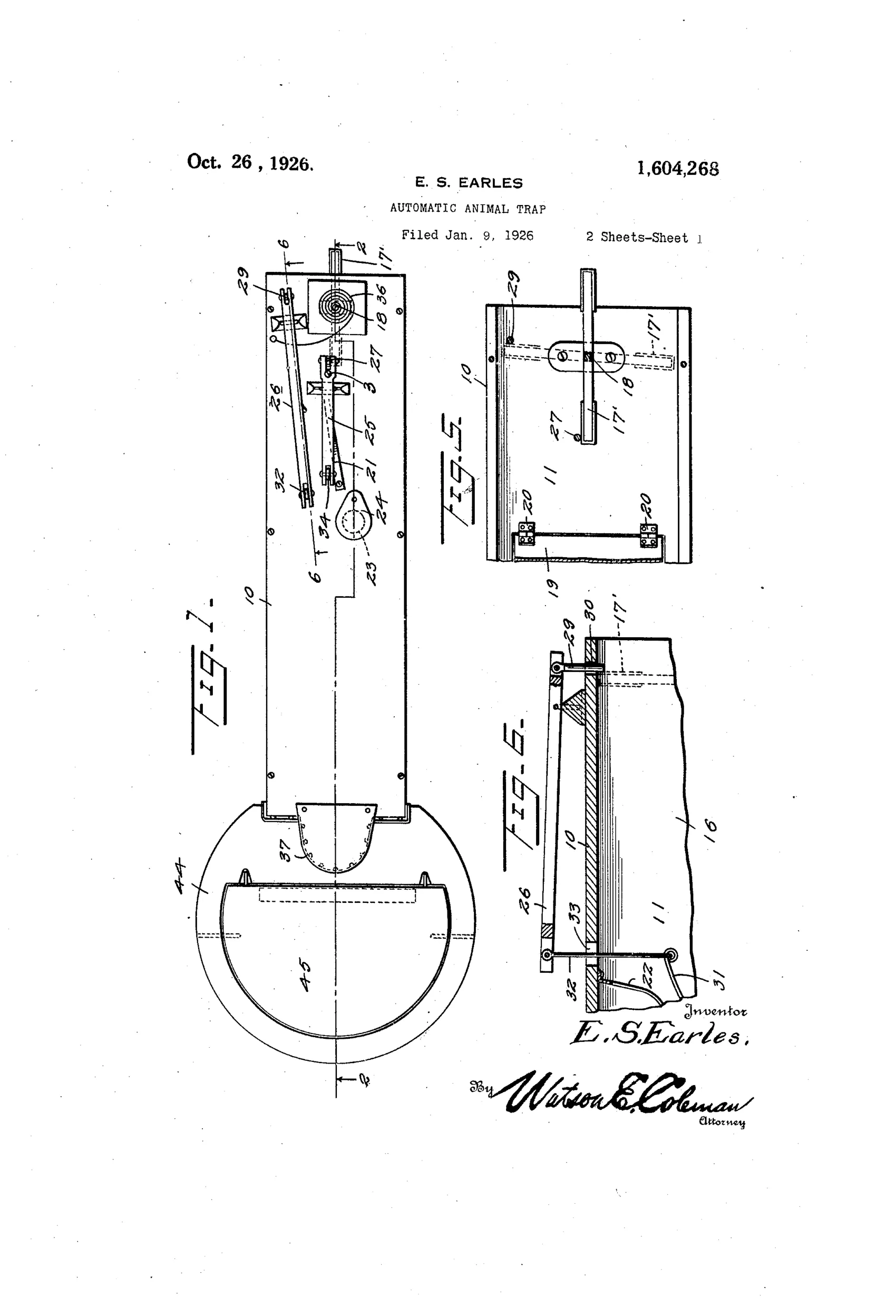
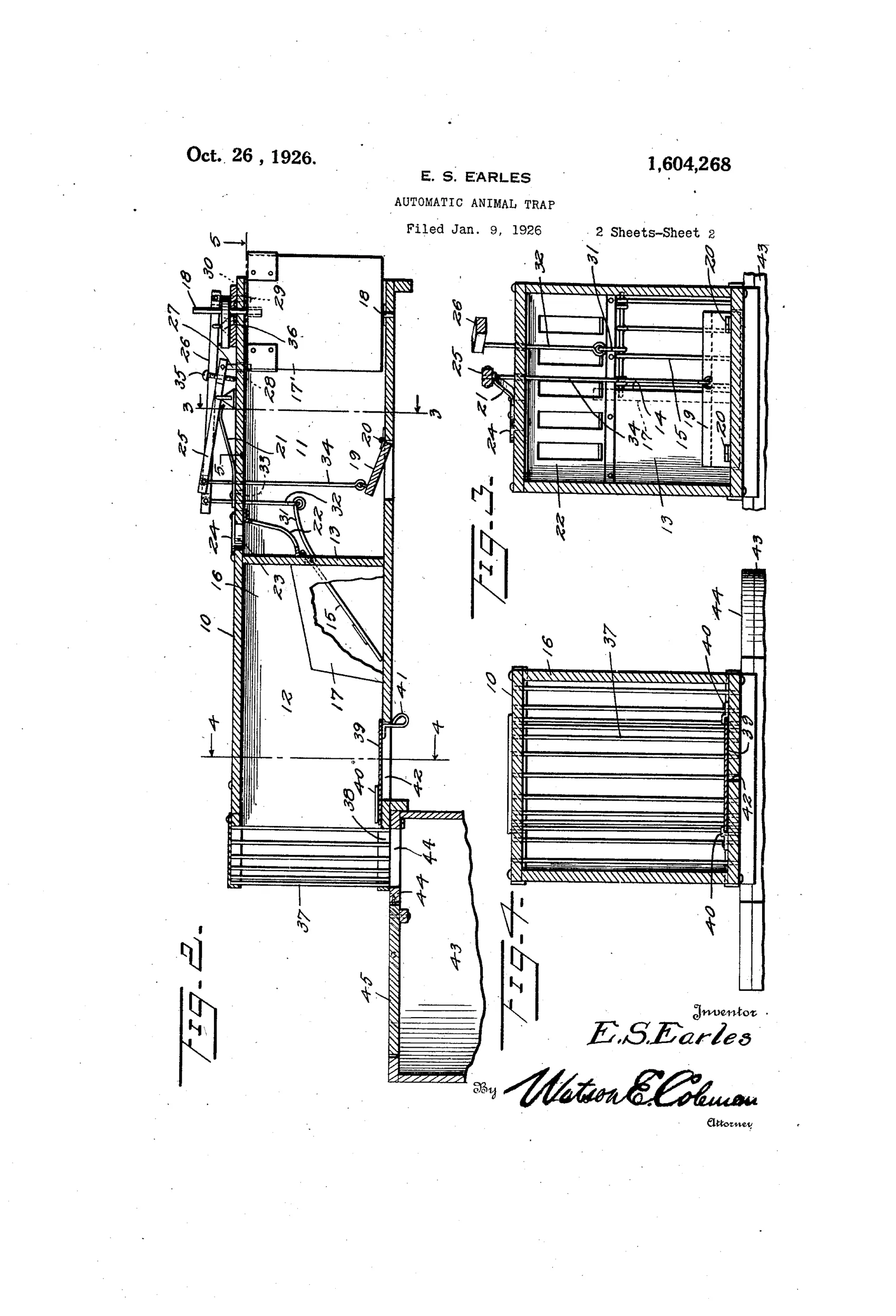
An animal enters the first compartment and steps on a pivoted platform, which releases a stop and allows a spring-driven door to swing shut behind it. The startled animal, seeking escape, pushes through a one-way grating into a second compartment. Lifting the grating trips a lever that releases the door's other stop, and a clock spring rotates the door back to its open position. The trap is thereby reset, and the grating prevents the animal from returning.
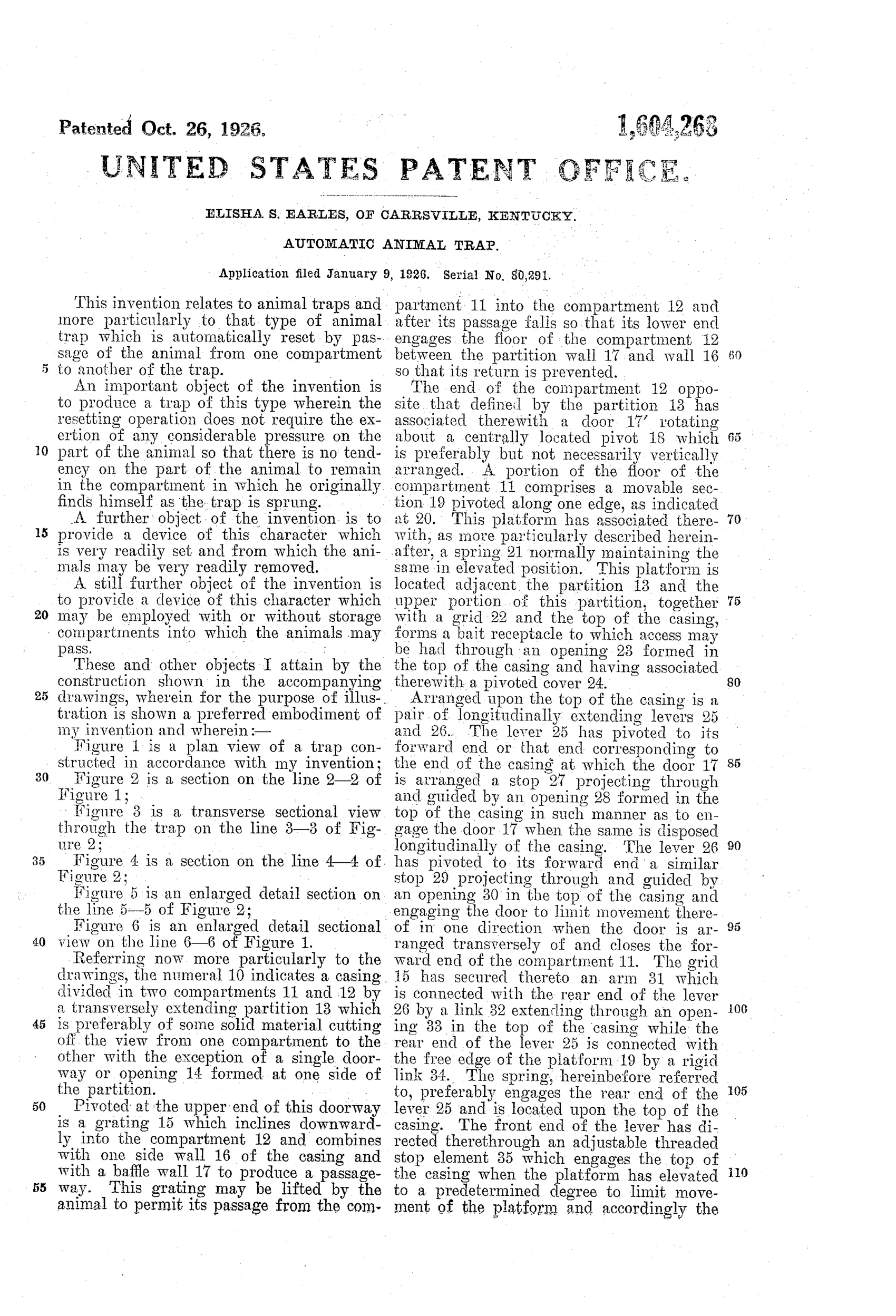
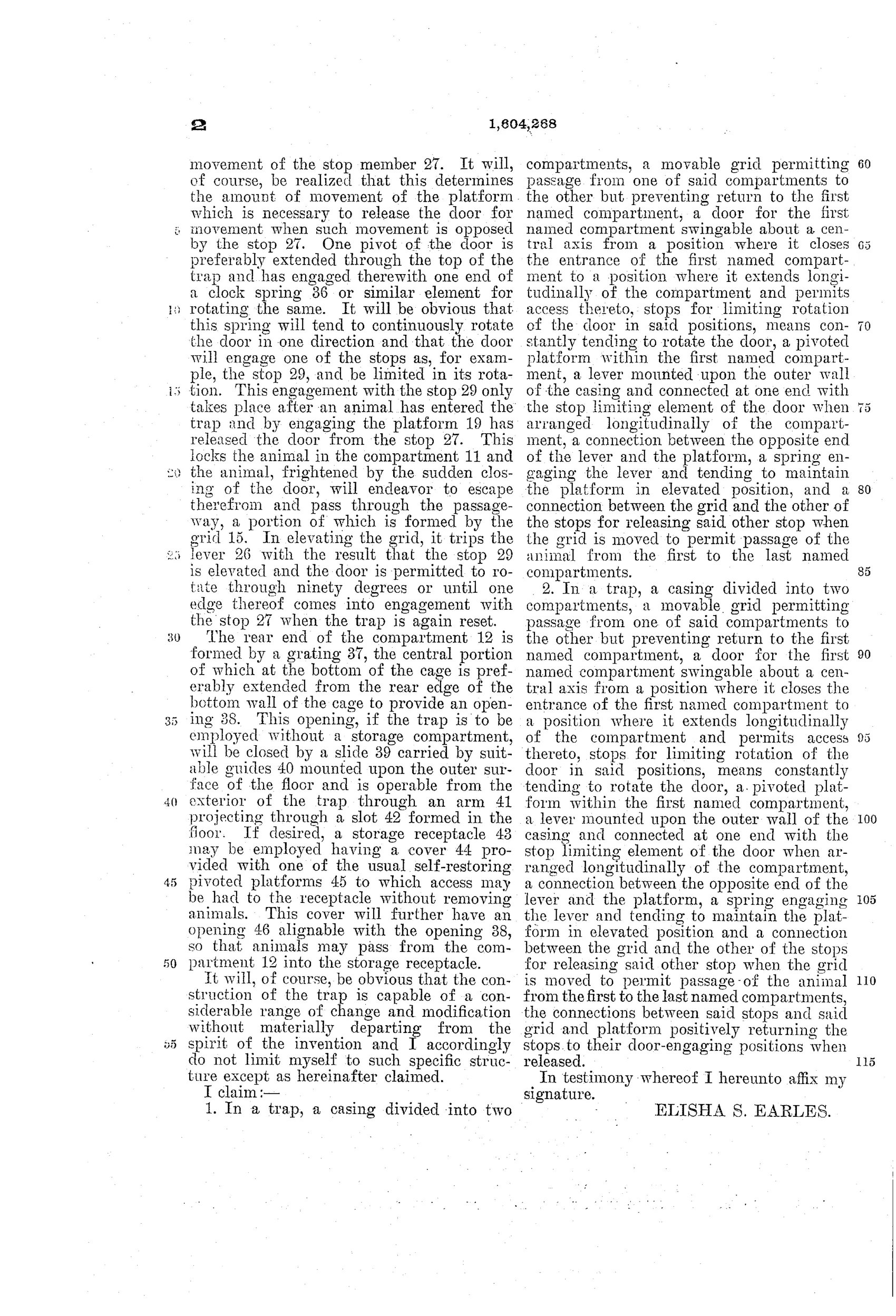
“An important object of the invention is to produce a trap of this type wherein the resetting operation does not require the exertion of any considerable pressure on the part of the animal so that there is no tendency on the part of the animal to remain in the compartment in which he originally finds himself as the trap is sprung.”— Elisha S. Earles, from the specification
And the world did not beat a path to his door.