TRAP
A spring-net trap enlarged to a span sufficient for bears.
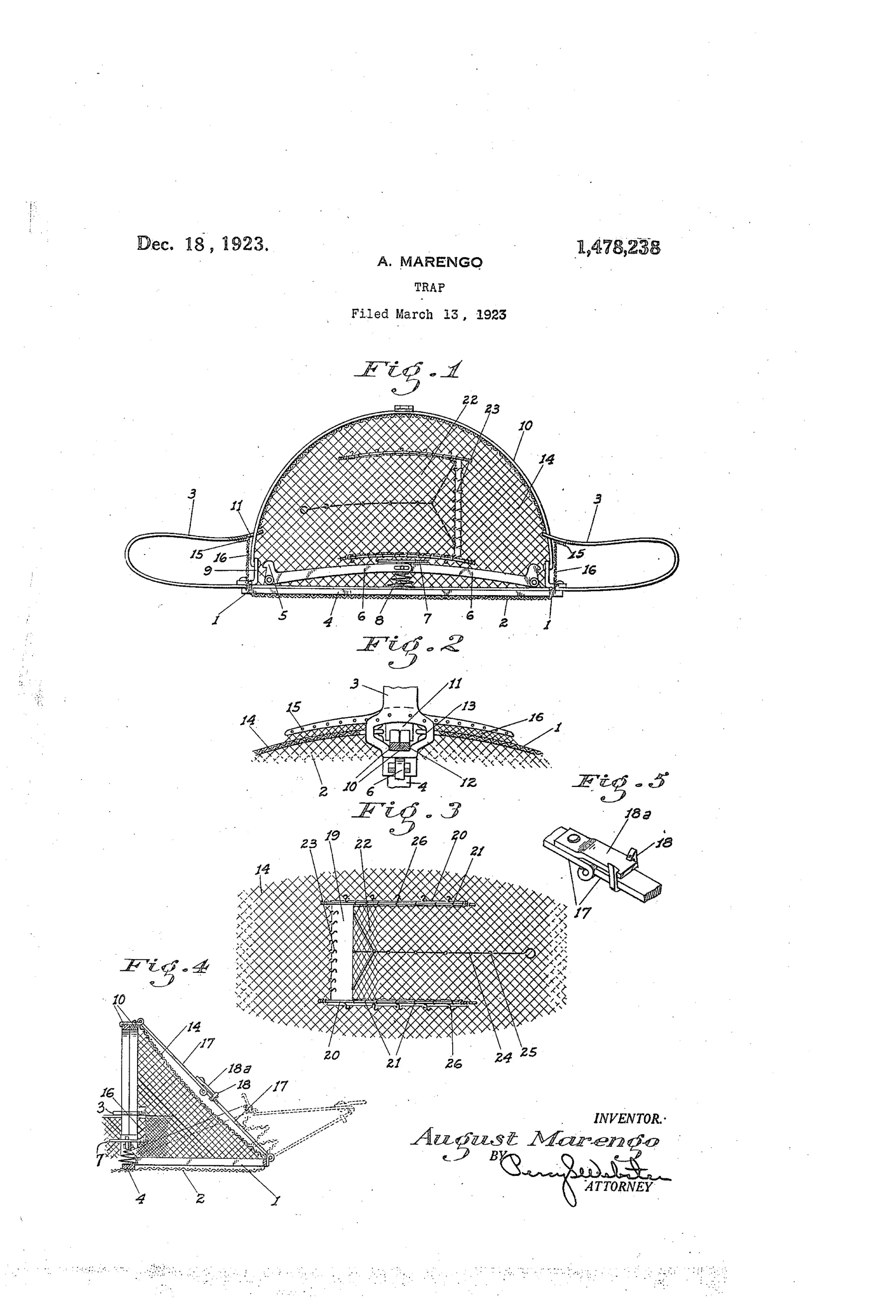
The animal disturbs a bait plate carried on overlapping catch-arms at the center of the trap. The catches release two compressed U-shaped springs, which swing hinged jaws upward through slotted brackets. The rising jaws draw attached netting into a closed dome over the animal. A sliding curtain in one side net can then be opened by a pull cord, allowing the animal to pass into a waiting cage without unspringing the trap.
“I have found from experimenting with a trap constructed along the lines of the device described in the above named patent, that while the construction as shown therein is suitable for small sizes of the trap, when it came to making traps having quite a few feet span, such as would be large enough to trap large animals, such as bears, etc., the natural weight of certain parts tended to cause the trap to be sprung too readily, but when sprung, the enclosing action was too sluggish, and sometimes failed to be moved to completion.”— August Marengo, from the specification
And the world did not beat a path to his door.