IMPROVEMENT IN ANIMAL-TRAPS
One rod travels straight; the other stabs downward in an adjustable arc.
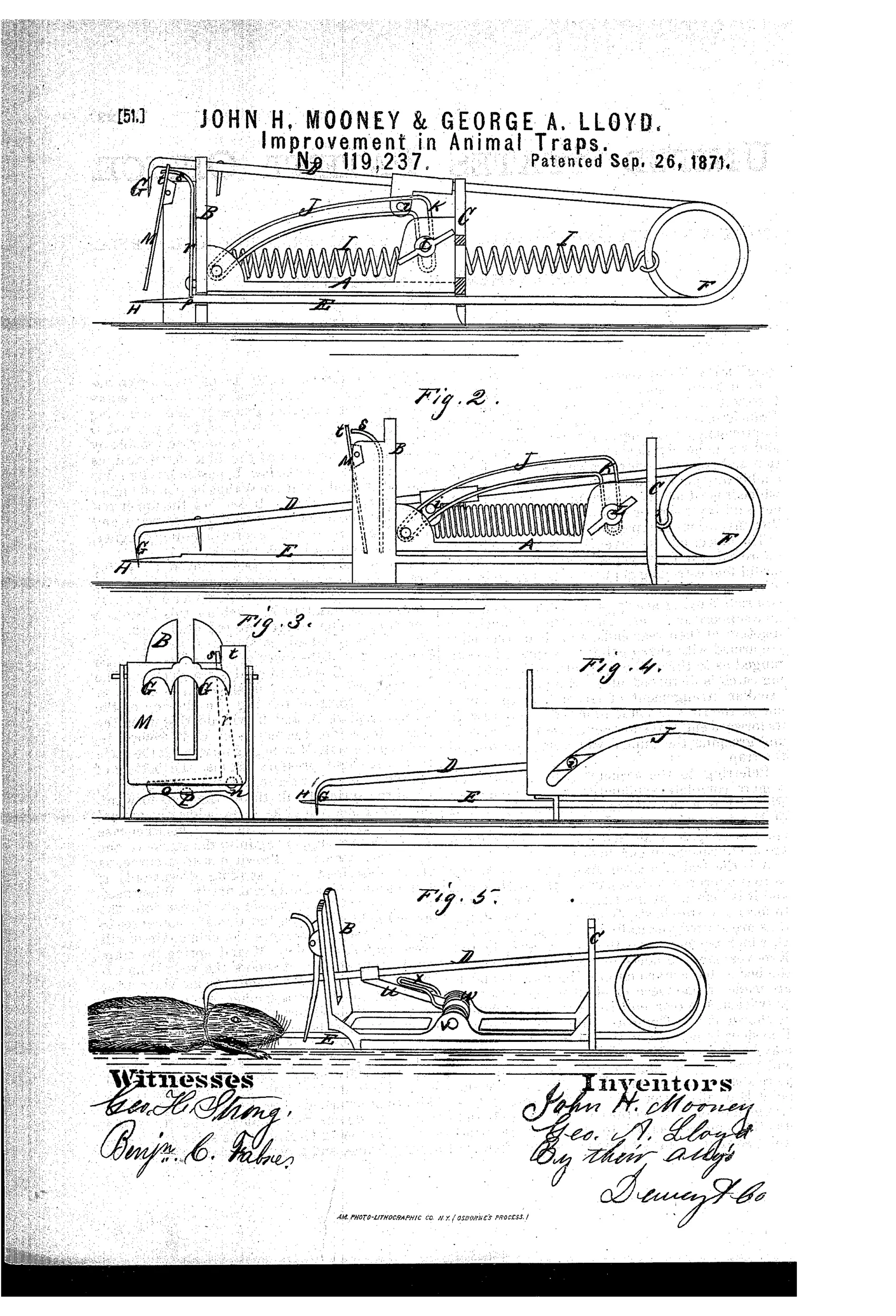
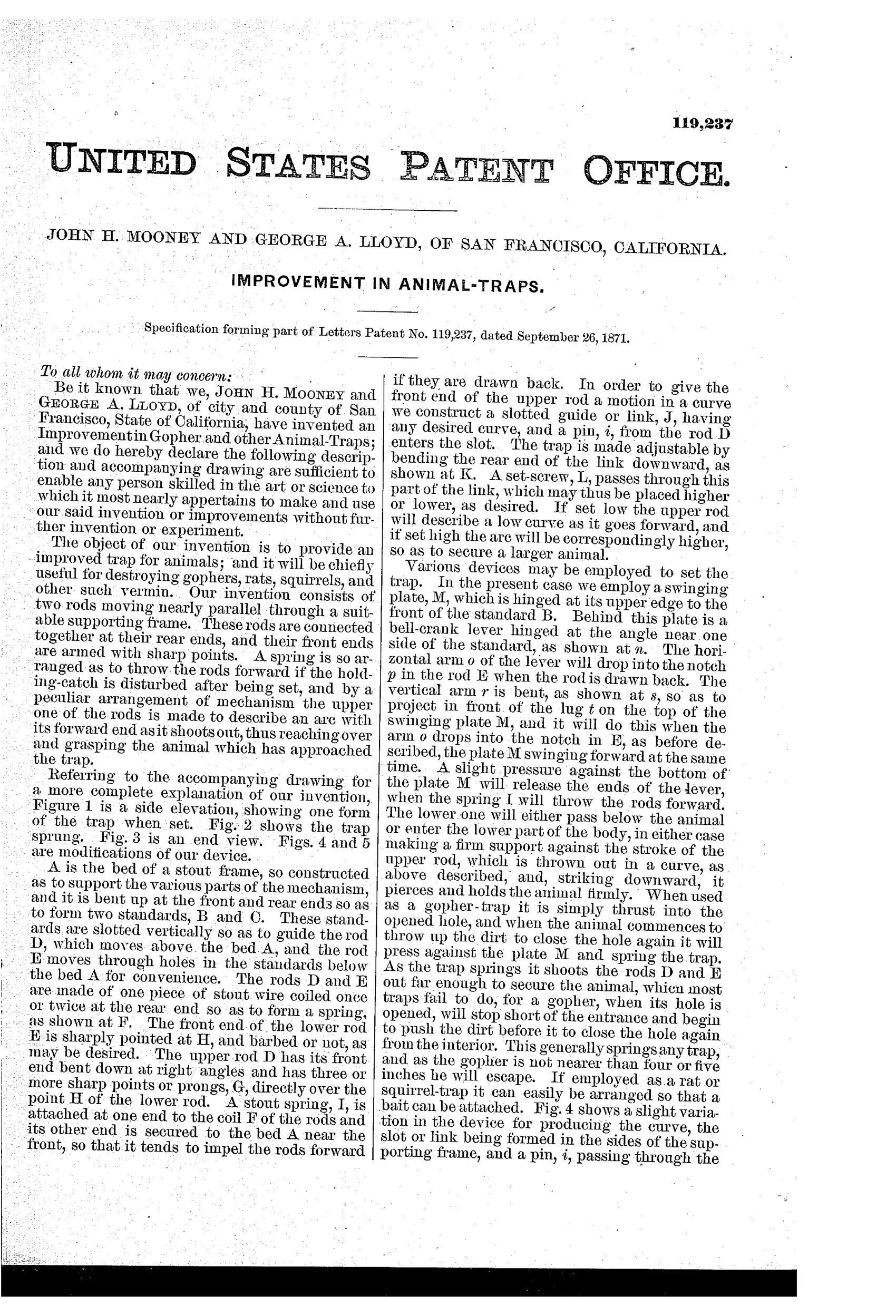
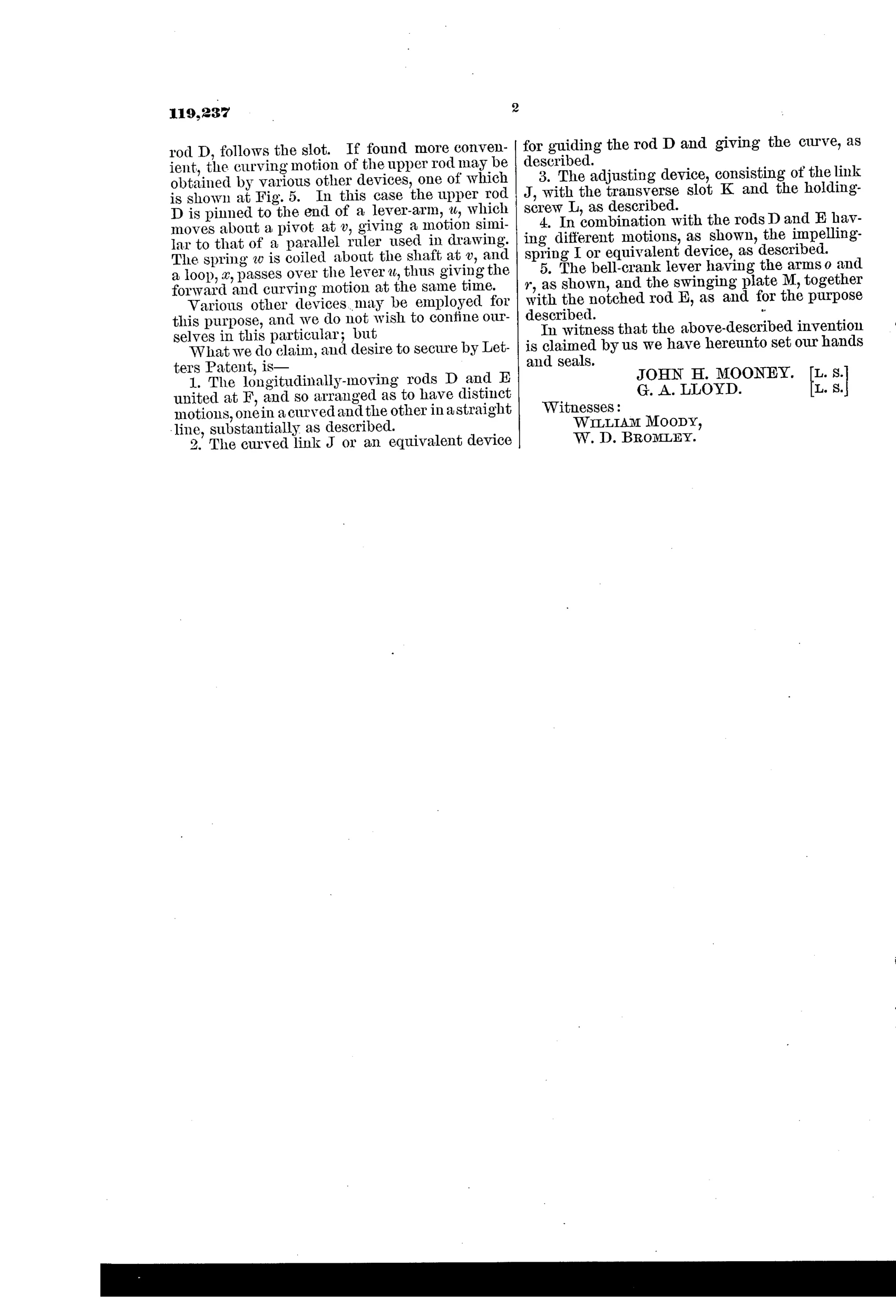
The gopher presses against a hinged plate while pushing dirt to close its hole. The plate releases a bell-crank lever, and a coiled spring drives two connected rods forward. The lower rod passes beneath or into the animal to support it; the upper rod, guided by a slotted link, describes a curve and strikes downward to pierce and hold it. A set-screw allows the height of the curve to be adjusted for larger animals.
“As the trap springs it shoots the rods D and E out far enough to secure the animal, which most traps fail to do, for a gopher, when its hole is opened, will stop short of the entrance and begin to push the dirt before it to close the hole again from the interior.”— John H. Mooney and George A. Lloyd, from the specification
And the world did not beat a path to their door.