ANIMAL TRAP
A lighter version of a trap patented eight years earlier.
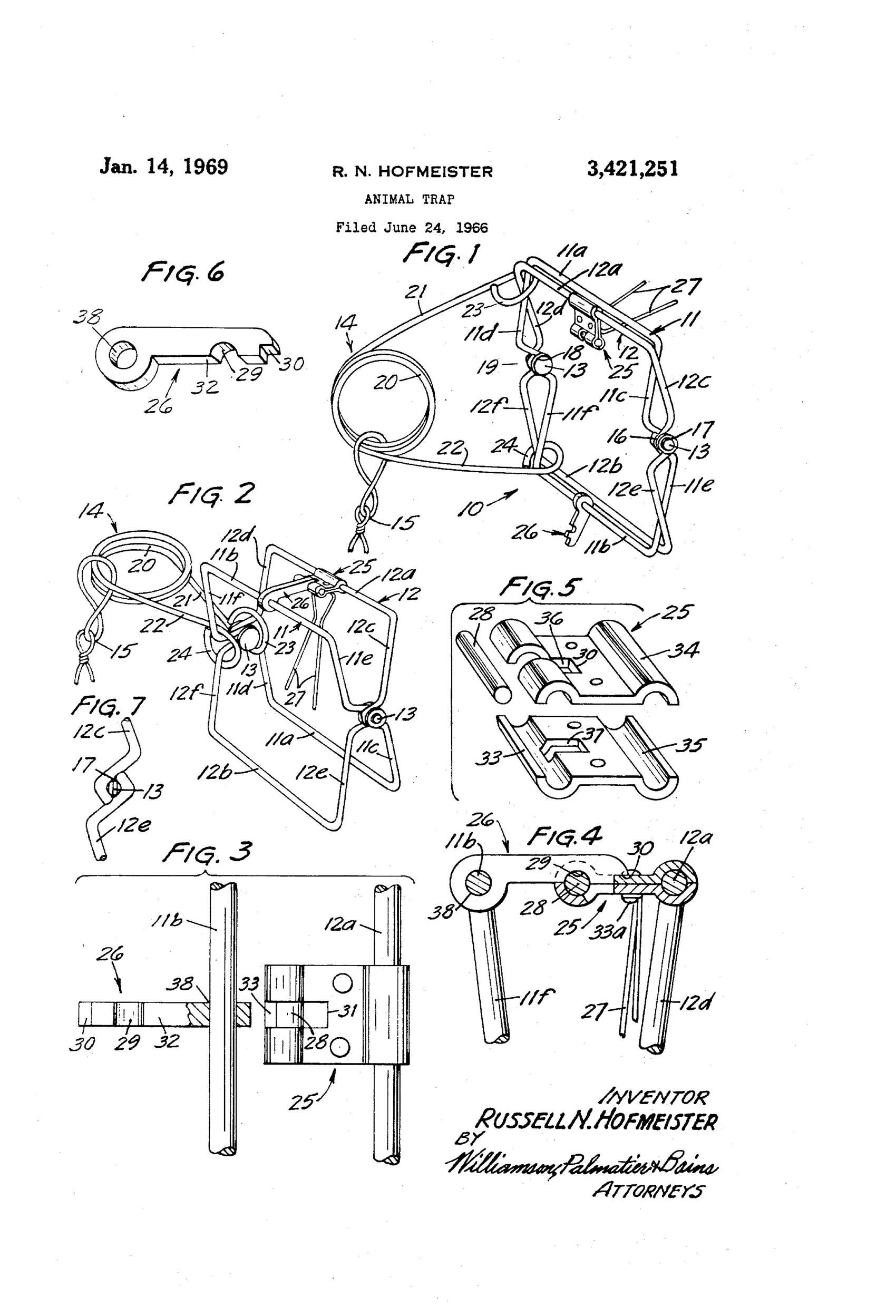
The trapper squeezes the two wire jaws together against the coil spring and rotates a latch into engagement with a pin on the trigger device, holding the jaws apart. Trigger wires hang from the trigger device across the opening. The animal contacts a trigger wire, typically with a foot, which rotates the trigger device and cams the latch loose. The spring snaps the two jaws together on the animal.
“Since a trapper typically carries animal traps to predetermined locations along a trap line on foot, it is desirable that an animal trap be light and compact. It is particularly important, however, that the trap be extremely reliable. A trap which does not release at the slightest contact by an animal and engage the animal therein is relatively useless to a trapper.”— Russell N. Hofmeister, from the specification
And the world did not beat a path to his door.